
Last updated September 10, 2026
Level 1 sweep and inspection to the NFPA 211 annual standard - flue, crown, cap, and flashing checked and photographed
Chimney sweep logs do not sweep chimneys. They loosen some creosote - which then falls where a brush and vacuum still have to collect it.
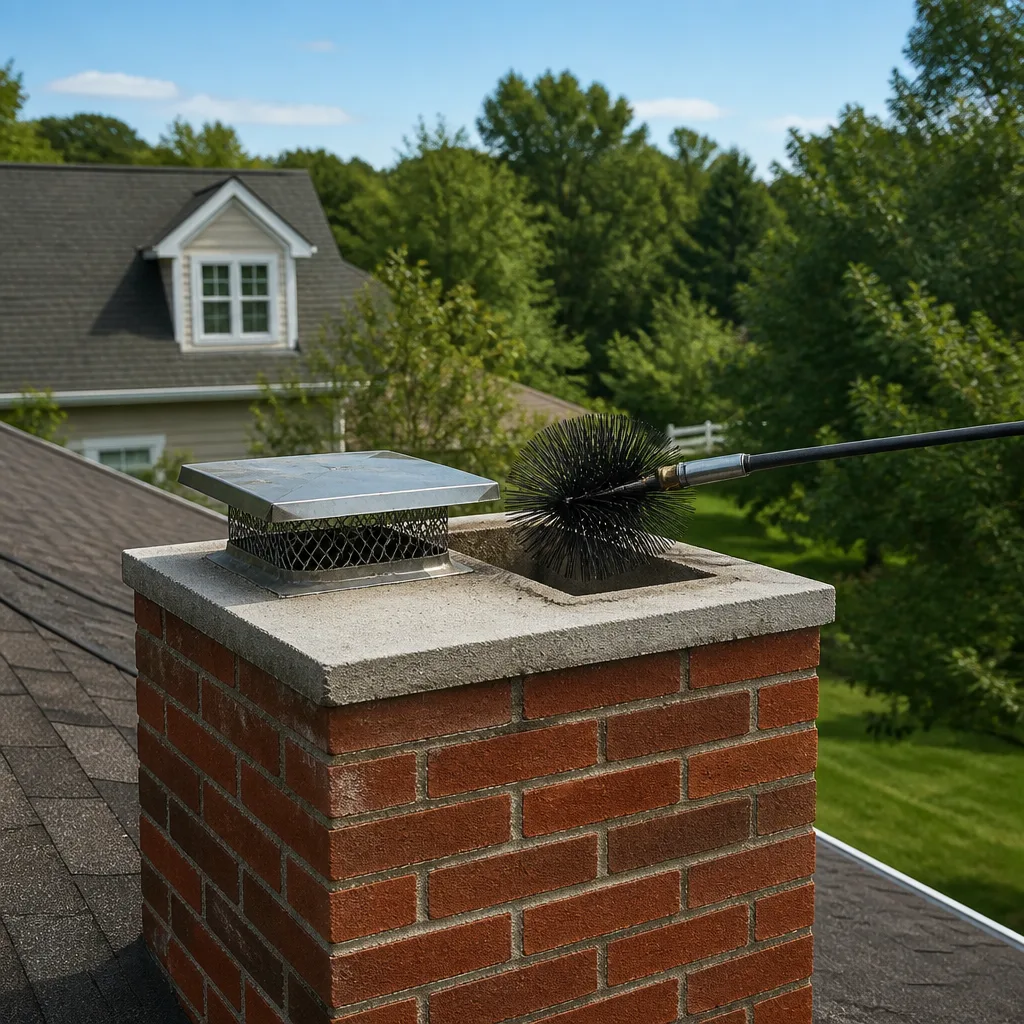
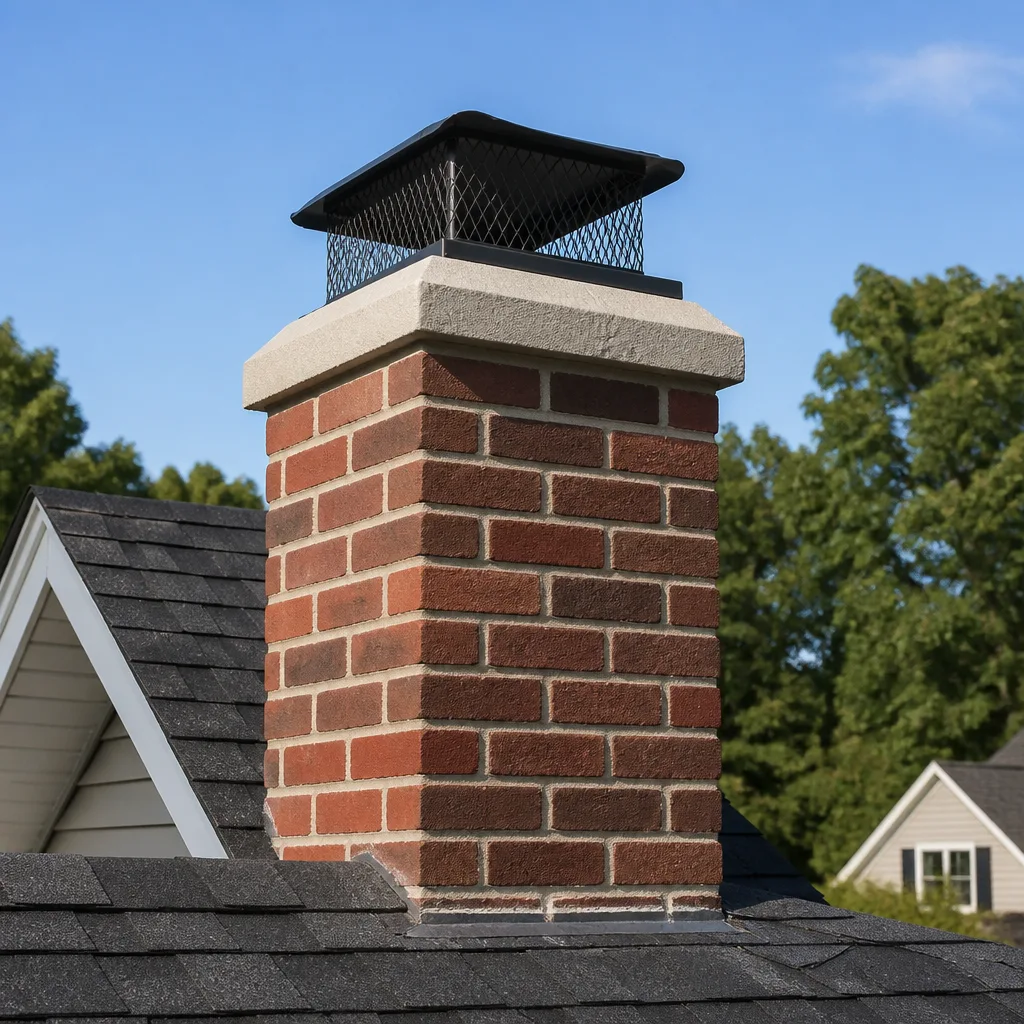
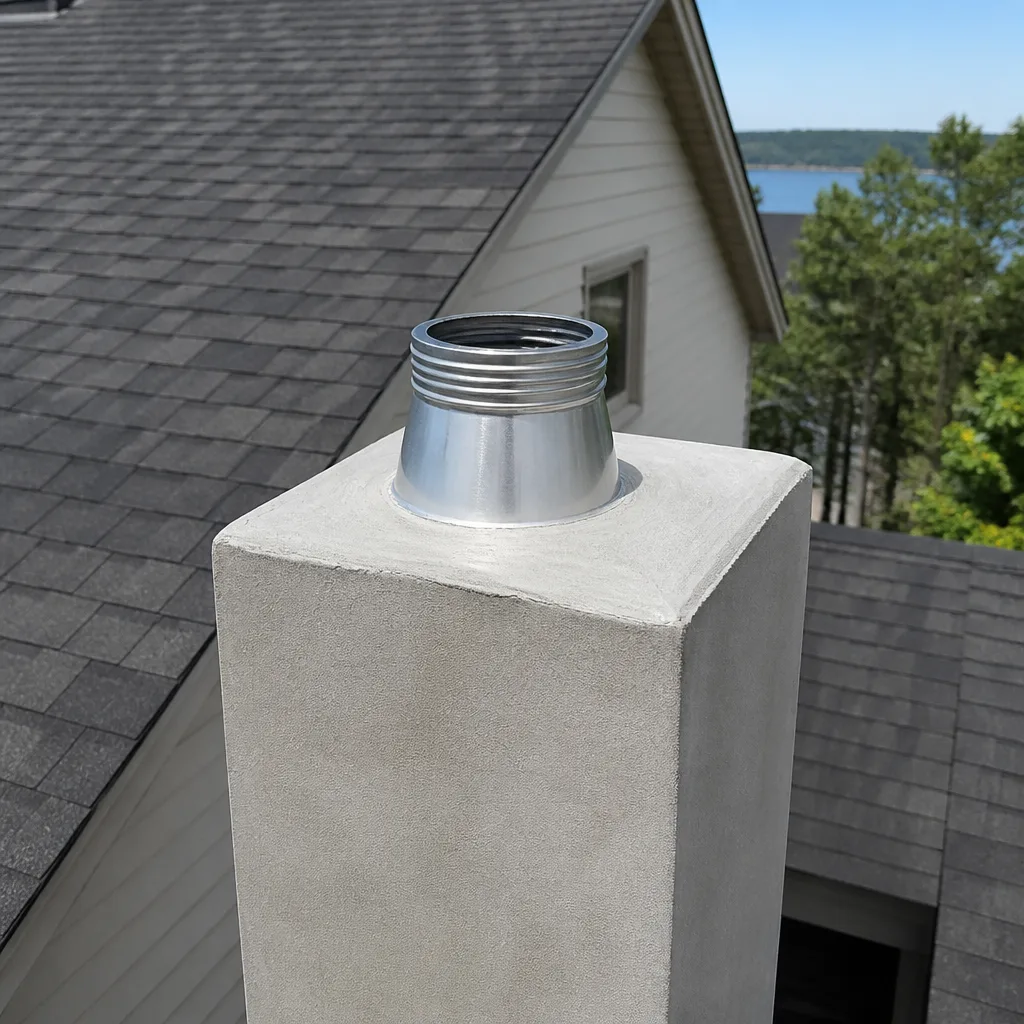
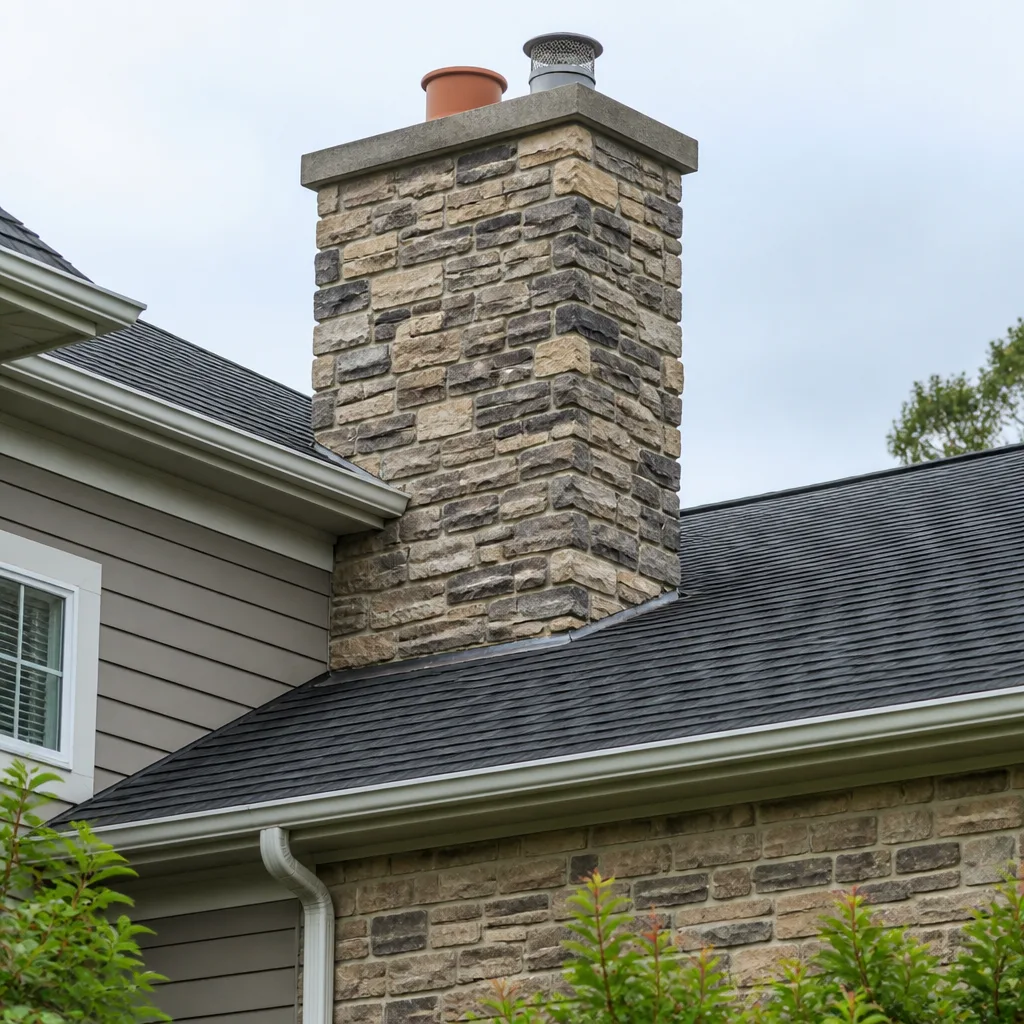
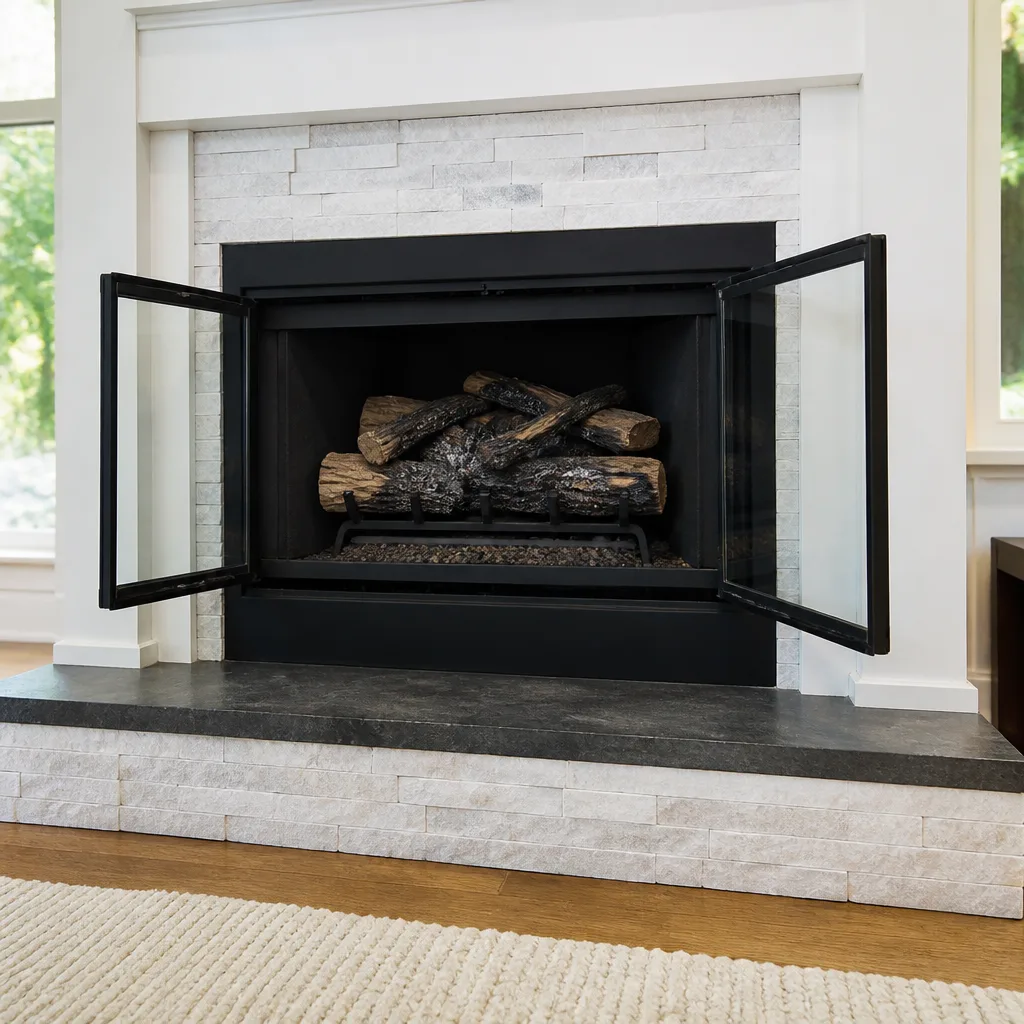
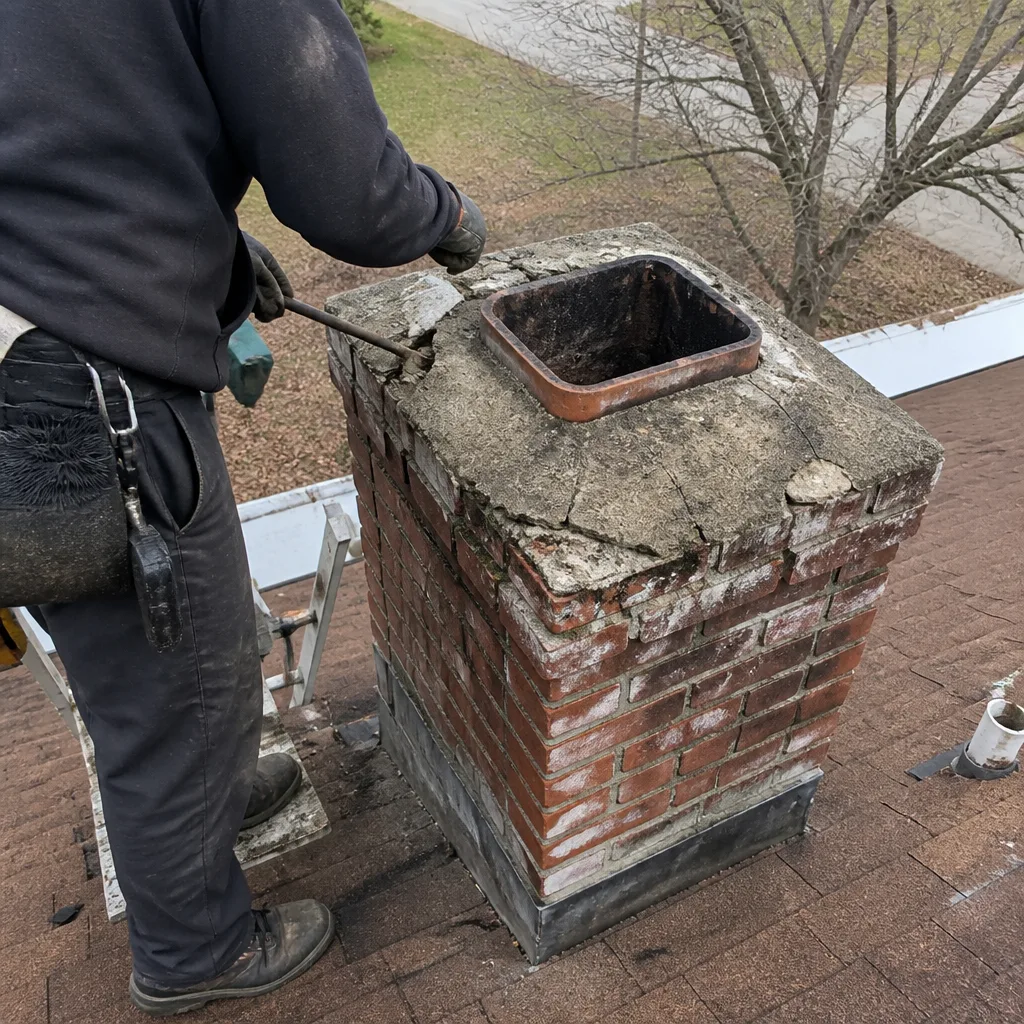 Before
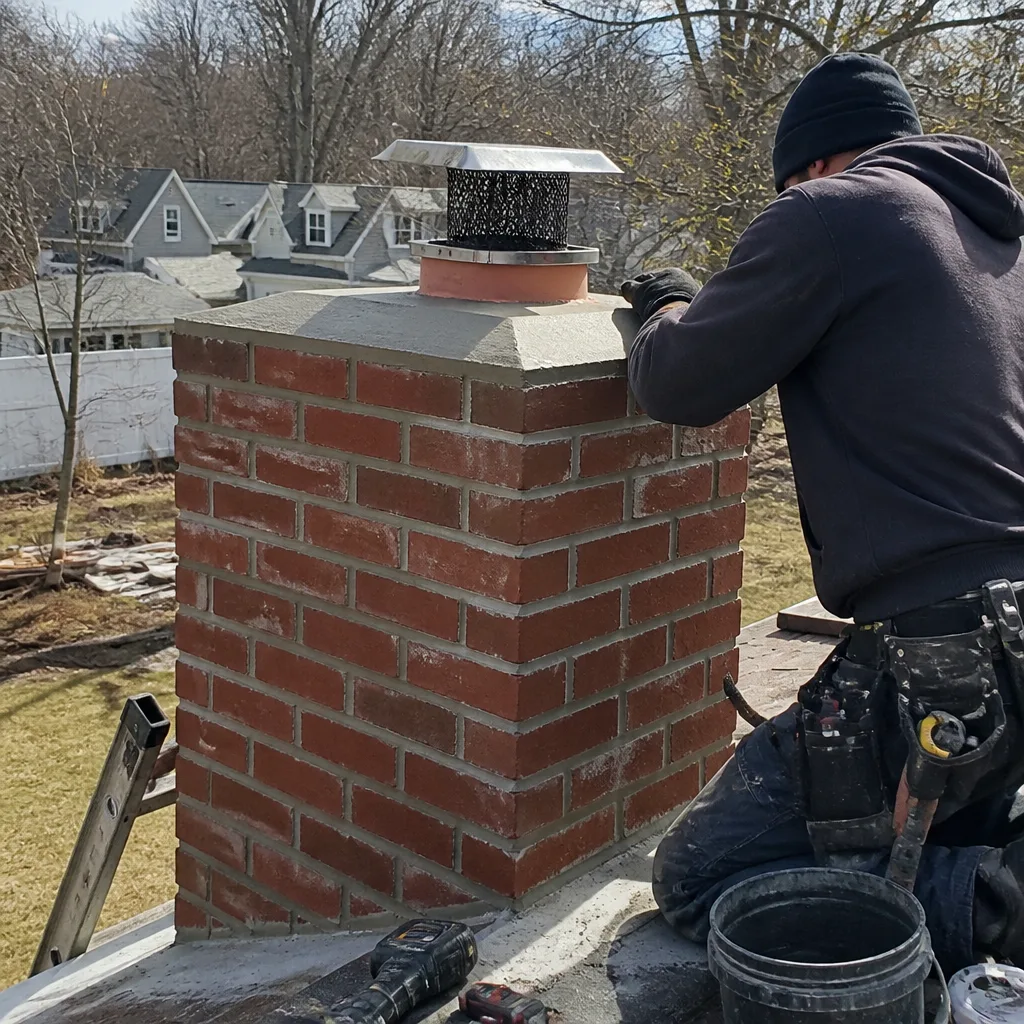 After
After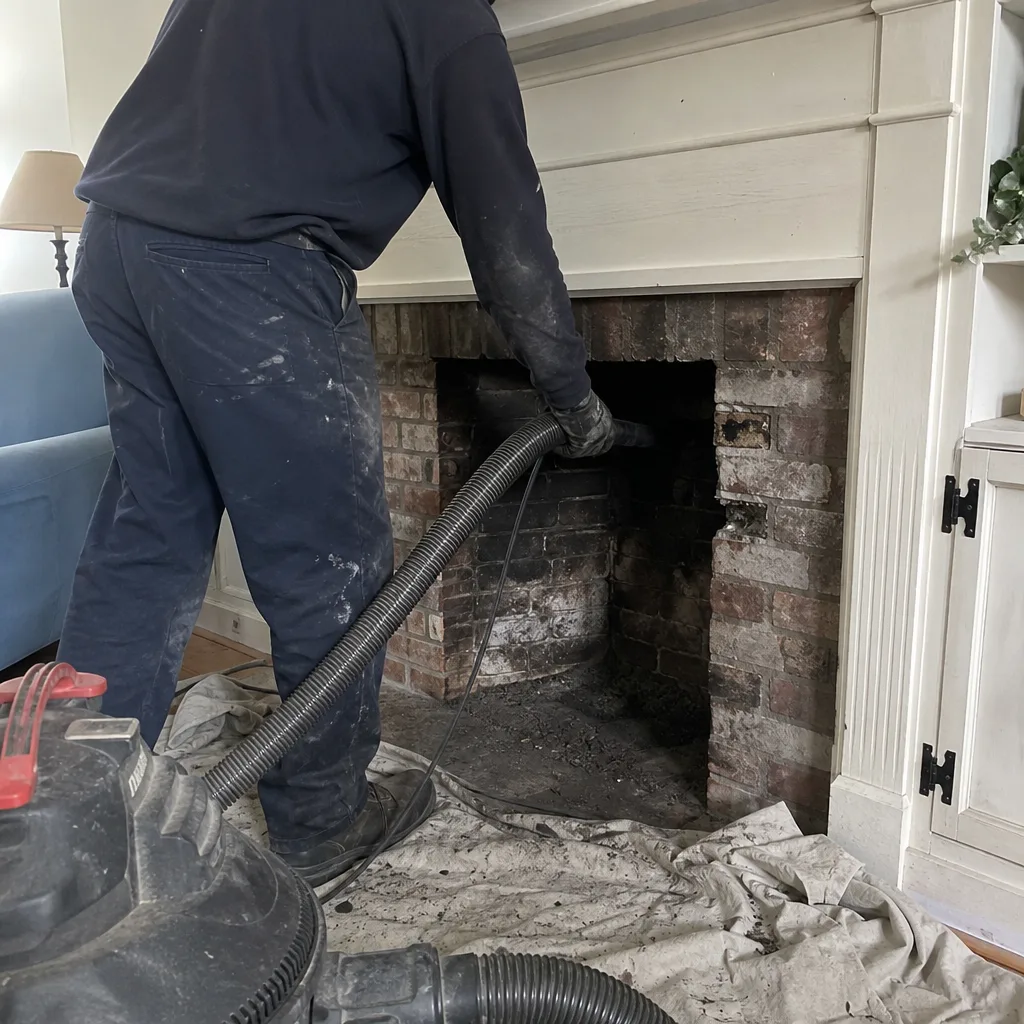 Before
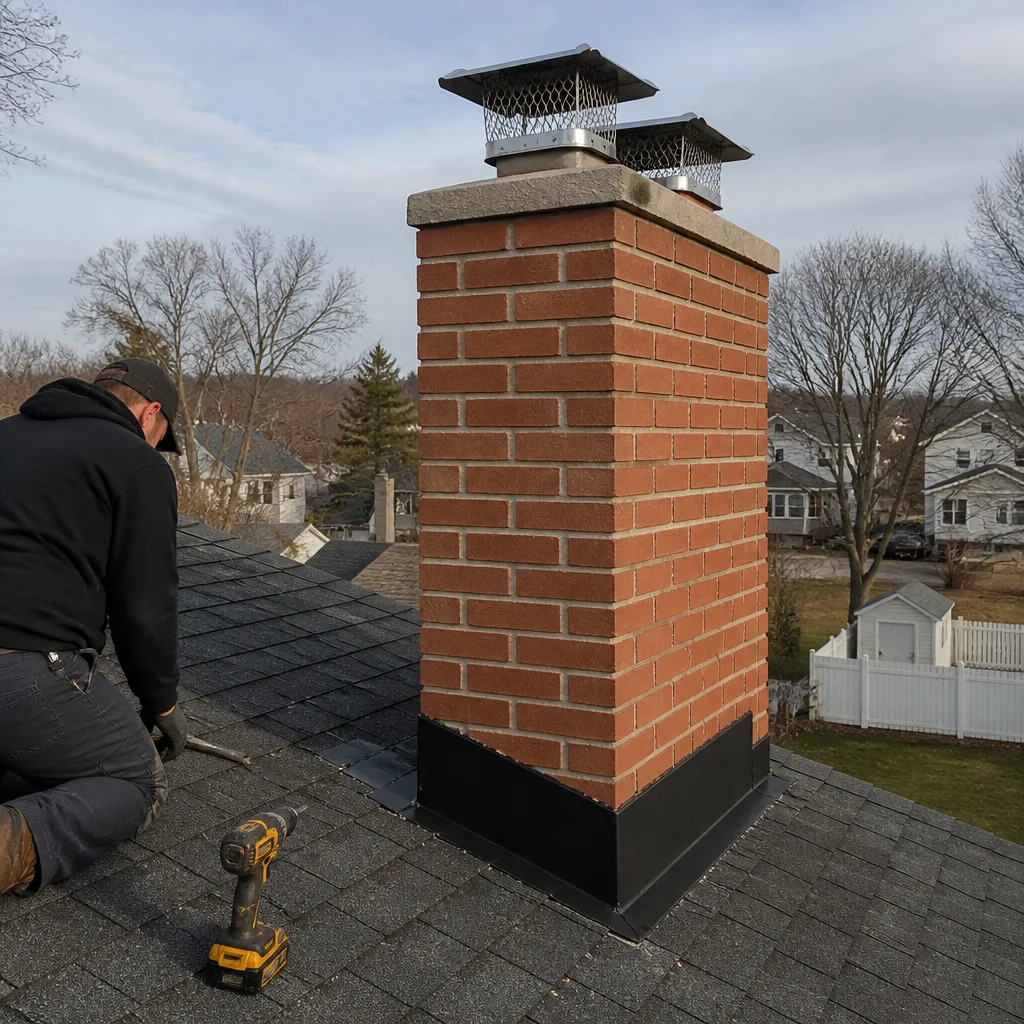 After
After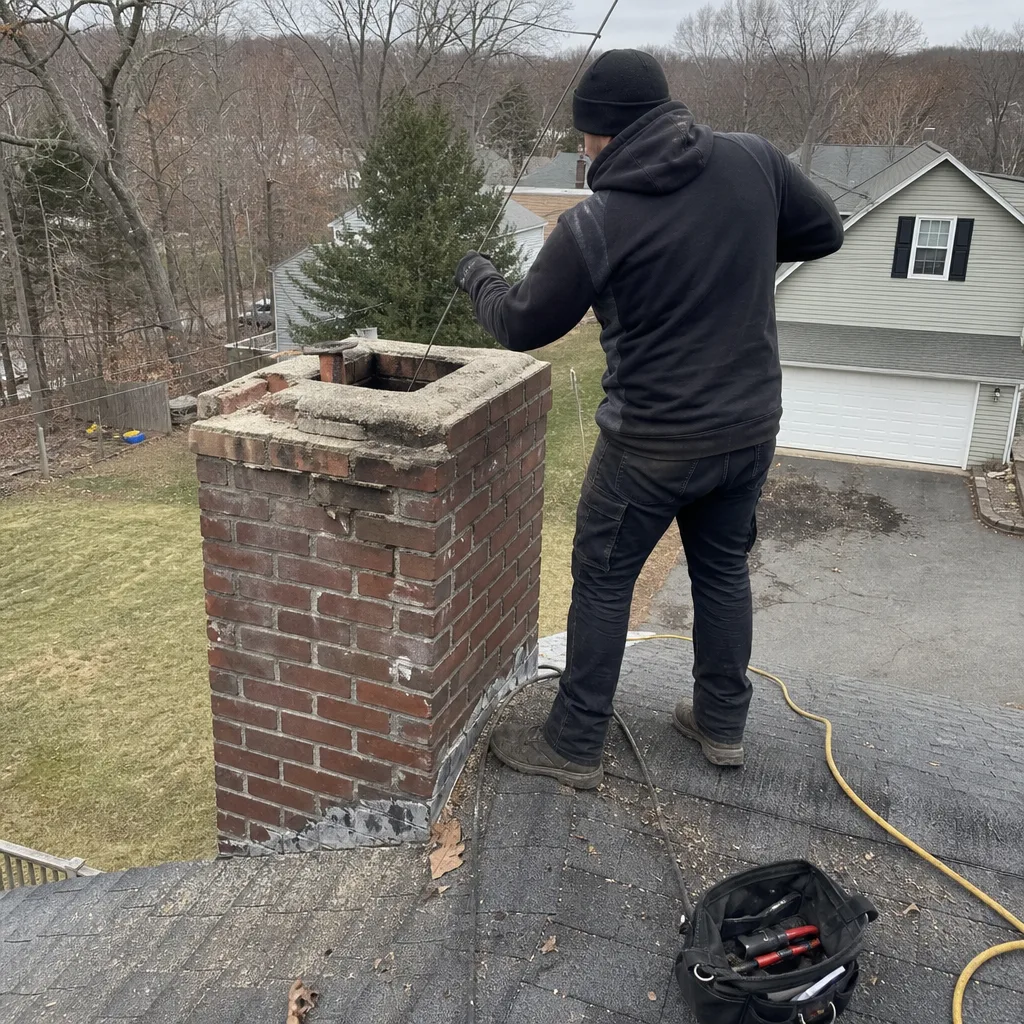 Before
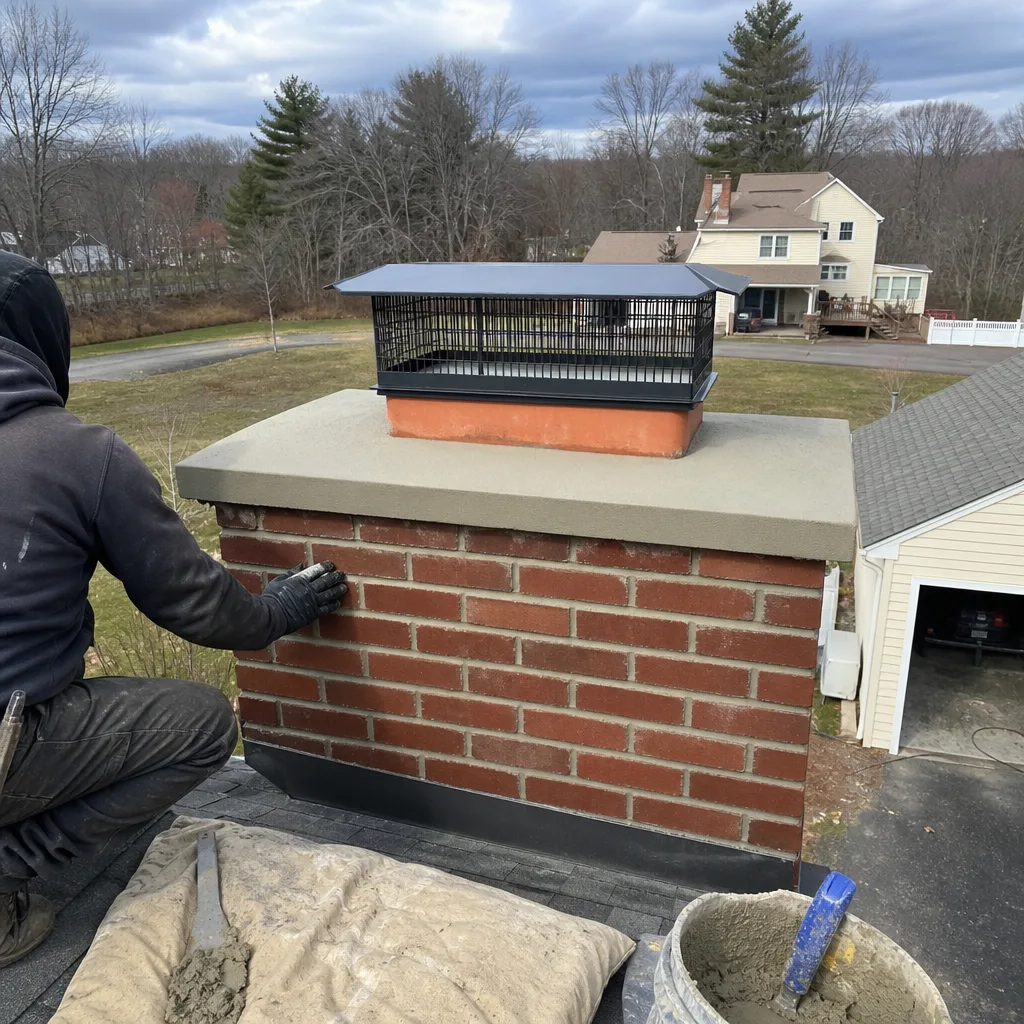 After
AfterThe Complete Guide to Chimney Cleaning in Haverhill
Haverhill has more pre-1940 housing stock than most Massachusetts cities its size, and a lot of those chimneys were built for coal, not the wood stoves and gas inserts now venting through them. That mismatch changes how often a flue needs attention, how it should be cleaned, and what a sweep actually needs to check before handing you a bill. This guide walks through what Haverhill homeowners should know before they book a chimney cleaning: how local housing age affects creosote buildup, what inspection levels actually mean, how Merrimack Valley humidity works against old liners, and how to read a sweep’s report without getting sold something you don’t need. For more guides & resources, see our blog.
Quick Answer
A chimney cleaning in Haverhill, MA typically runs $160 to $300 for a standard Level 1 sweep and inspection, and most homes with wood-burning fireplaces or stoves need it once a year, burn or no burn. Older Haverhill flues, especially pre-1940 brick chimneys converted from coal, often need a Level 2 camera inspection to confirm the liner is still safe before the first fire of the season. If you are weighing whether to do this yourself, read our DIY vs Professional Chimney Cleaning: The Haverhill Homeowner’s Decision Guide first.
Table of Contents
- Why Haverhill Chimneys Are Different
- How Often Should a Chimney Be Cleaned in Haverhill?
- Level 1, Level 2, and Level 3 Inspections: What You’re Actually Paying For
- Creosote Stages: From Brush Job to Glaze
- Merrimack Valley Humidity and Liner Damage
- How to Read a Sweep’s Report
- What a Chimney Cleaning Costs in Haverhill
- Common Mistakes to Avoid
- When to Call a Professional
- Frequently Asked Questions
- The Bottom Line
Why Haverhill Chimneys Are Different
Haverhill’s housing stock tells a story. Walk the streets of the Acre, Bradford, Riverside, or Mount Washington neighborhoods and you’ll see triple-deckers from the early 1900s, converted mill housing, and Victorians with original brickwork. Many of those chimneys were built when coal was the primary heat source. Coal burns hotter and cleaner than wood in some ways, but it produces acidic flue gases that slowly eat at lime mortar. Wood, by contrast, produces creosote: a sticky, flammable residue that layers up inside the flue with every fire.
When a coal chimney gets converted to burn wood, two things happen. First, the flue is often oversized for the appliance now attached to it. An oversized flue cools smoke too quickly, which means creosote condenses faster on the chimney walls. Second, the original clay tile liner, if there is one, may already have cracked from decades of thermal cycling. A cracked liner plus a heavy creosote load is a chimney fire waiting for a spark.
We see this pattern often in Haverhill homes built between 1880 and 1940. The fireplace works fine for the first season after a sweep, then the homeowner notices smoke backing into the room or a dark, tar-like glaze forming on the damper. That’s the flue telling you something. It does not care how the fire looks. It cares how it breathes.
Our point: a cleaning in Haverhill is rarely just a cleaning when the house is older. The sweep should be checking the liner, the mortar joints, the crown, and the flue-to-appliance sizing every time. If your sweep shows up, runs a brush, and leaves in 30 minutes without looking at any of that, you have paid for half a job. Wendell and his crew have worked these older Haverhill flues since 1999, and the chimney cleaning and sweep service we run in the city is built around what these old houses actually need.
How Often Should a Chimney Be Cleaned in Haverhill?
Once a year, burn or no burn. That is the answer, and we do not soften it for anyone. The National Fire Protection Association standard, NFPA 211, says chimneys should be inspected at least once a year and cleaned as needed. For Haverhill homeowners who burn wood through a Merrimack Valley winter, that means a cleaning every year. For gas fireplaces, which Haverhill has in abundance after years of furnace conversions, the schedule can stretch to every other year, but an annual inspection is still worth it.
Why do we say burn or no burn? Because chimneys break in the off-season too. Moisture works on mortar in summer. Animals get into uncapped flues in spring. Freeze-thaw cycles in Haverhill, where January nights drop into the teens and days climb above freezing, expand and contract brickwork slowly but surely. For year-round maintenance tips, see our Seasonal Chimney Cleaning Care for Haverhill: Year-Round Homeowner’s Guide. A chimney that sat untouched from April to October may have a new crack in the crown or a bird’s nest lodged above the damper. The first fire of the season is the worst time to discover it.
- Wood-burning fireplace or stove: Clean every year, ideally in late summer or early fall before the burning season starts.
- Gas fireplace or insert: Inspect annually, clean every 1-2 years depending on use and venting.
- Oil furnace flue: Clean every year. Oil produces sulfur-laden soot that corrodes liners faster than wood smoke.
- Pellet stove: Clean twice per heating season and service annually. Pellet ash is fine and coats the flue quickly.
- Seasonal fireplace (used occasionally): Still sweep annually. Occasional use still produces creosote, and a dormant chimney attracts animals.
Now, a fair question: is every Haverhill chimney dirty enough to need a cleaning every twelve months? Not always. We have swept chimneys after a year of regular fires and found very little creosote because the homeowner burned seasoned hardwood at high heat, which produces less buildup. We have also swept chimneys after one winter that looked like the inside of a barbecue pit, full of stage-two creosote from wet pine and smoldering fires. The point of the annual visit is not just to clean. It is to look. A chimney repair caught early costs a few hundred dollars. Caught late, it can run into thousands.
Level 1, Level 2, and Level 3 Inspections: What You’re Actually Paying For
Chimney inspections come in three levels, defined by NFPA 211. Knowing which one applies to your situation prevents you from paying for more than you need, or worse, getting less than the situation demands. For help choosing a trustworthy sweep, see our How to Hire a Chimney Cleaning Contractor in Haverhill: A Step-by-Step Guide.
Level 1 Inspection
A Level 1 inspection is the one included with a standard chimney cleaning. The sweep examines the readily accessible portions of the chimney: the firebox, damper, flue interior as far as can be seen, and the exterior above the roofline. No special equipment. No camera. No disassembly. For a chimney that has not changed since the last cleaning and is not showing problems, this is appropriate. It is what most Haverhill homes need for their annual visit.
Level 2 Inspection
A Level 2 inspection includes everything in Level 1 plus a camera scan of the flue interior and an inspection of the attic, crawlspace, and other accessible areas where the chimney passes through the house. NFPA 211 requires a Level 2 inspection when the home is being sold, when the chimney has changed use (coal to wood, wood to gas), after a chimney fire, after an earthquake or severe weather event, or when a new appliance is connected to the flue. This matters in Haverhill: if you bought your pre-1940 home in the last decade and have never seen the inside of the flue on camera, you are flying blind. We recommend a Level 2 for any Haverhill home older than 60 years that has not had one in the last five years.
Level 3 Inspection
A Level 3 inspection involves removing part of the chimney or surrounding structure to access hidden areas. This is rare for residential work and usually follows a suspected fire inside the chimney, a mystery leak, or a structural failure. If a sweep recommends a Level 3, ask exactly why and get the reasoning in writing before work begins.
Here is the practical version: for a standard Haverhill annual cleaning, a Level 1 is what you are paying for and should be included in the price. But given the age of housing stock in this city, we often recommend adding a camera scan if the house predates 1940 and the liner has never been inspected. The camera footage and a plain-English verdict: every time, no exceptions. You will see what we see.
Creosote Stages: From Brush Job to Glaze
Creosote is the byproduct of wood smoke: unburned particles, tar, and moisture that condense on cooler flue walls. It accumulates in three stages, and each stage changes the job.
Stage one is a brush job. This creosote is flaky, dry, and mostly dark gray or dull brown. It brushes off with standard chimney sweeping tools. Most Haverhill fireplaces with regular burn habits and seasoned wood fall into this category. The cleaning is straightforward and usually takes under an hour.
Stage two is crunchy and thicker. The flakes become harder, denser, and occasionally shiny. Brushing alone may not remove all of it. This is where a sweep may use rotary loops or additional passes, and it takes longer. Stage two creosote shows up when fires burn cooler than they should: green wood, a damp chimney, or a homeowner who runs the fire in smolder mode overnight. We see this a lot in Haverhill homes where firewood comes from whoever is selling it cheapest by the side of Route 110, wet from the previous winter’s snow.
Stage three is a glaze. It looks like tar, hardens like resin, and bonds to the flue. A brush cannot remove stage-three creosote. It requires chemical treatment, often a product like the ones made by Top Hat Chimney‘s partner brand HeatShield, or mechanical removal with rotary chains. Stage-three creosote is also the most dangerous: it burns hot and fast, and it is the primary fuel in the most destructive chimney fires. First-degree creosote is a brush job. Third-degree is a glaze. Catch it early.
What moves a chimney from stage one to stage three faster than anything? Burning wet wood with a low fire. In Haverhill’s damp climate, firewood that has sat uncovered through a wet spring and humid summer never dries below the 20% moisture content that wood needs for clean combustion. The smoke spends more time smoldering, the flue stays cooler, and creosote condenses out at a much higher rate. We recommend buying wood from a local supplier who seasons it under cover, and we recommend storing it off the ground with airflow on all sides.
Merrimack Valley Humidity and Liner Damage
The Merrimack River runs through the center of Haverhill and puts moisture in the air year-round. That humidity works on chimneys in a specific way, and it is not something a generic chimney guide will ever mention.
Clay tile liners, the standard in pre-1960 construction, absorb small amounts of moisture from the flue gases and from ambient humidity. When the chimney sits unused through Haverhill’s humid summers, that moisture stays in the tile and mortar. When winter comes and the first fire heats the flue to several hundred degrees, the trapped moisture expands. The result is spalling: small pieces of clay or mortar flake off, cracks run through the joints, and the liner slowly loses its integrity. Each seasonal cycle adds more damage. This is why liners in older Haverhill chimneys fail at a rate we do not see in drier parts of the state.
What should a homeowner look for? Early moisture damage is most visible in the attic, where the chimney passes through unconditioned space. Look for white or gray efflorescence on the brick, crumbling mortar joints, or a musty smell near the chimney chase. Inside the house, a damaged liner can show up as a faint smoke smell even when there is no fire, or as pieces of tile that fall into the firebox after a cleaning.
If caught early, a damaged clay liner can sometimes be repaired with a resurfacing product like HeatShield, which re-coats the flue interior without a full rebuild. If the damage is extensive, the answer is a stainless steel liner, and here the brand matters. We install fireplace service components from DuraFlex and Copperfield, two manufacturers whose stainless liners hold up to the Merrimack Valley’s moisture and thermal cycling better than most. The choice between repair and replacement is not one a homeowner should make without seeing the camera footage. We show you the screen. You decide with the facts in front of you.
How to Read a Sweep’s Report
Every professional chimney cleaning should end with some kind of report: a written list of what was found, what was done, and what the sweep recommends. The language in that report tells you whether you are dealing with a straight shooter or a sales rep. Here is how to translate.
Urgent items. These are safety issues that need attention before you burn again. A cracked flue tile, a missing chimney cap, a chimney fire indicator (honeycomb-textured creosote or damaged metal in the flue), a disconnected appliance connector, or a blocked flue. If your report says the chimney is not safe to use, take it seriously. No reputable sweep uses that language casually.
Watch items. These are things that are acceptable today but will become problems if ignored for another year or two. A minor water stain, a slightly pitted damper, a crown with hairline cracks, a liner that is beginning to spall but is not yet compromised. A good sweep will tell you what “watch” means in real terms: what to look for and when to schedule the follow-up. Wendell puts a note on every report: we’d rather tell you it can wait than sell you something you don’t need this year.
Sales pitch items. These are the ones that should raise an eyebrow. “Your chimney needs a complete waterproofing treatment” without evidence of absorption. “We recommend a new liner” without camera footage showing the damage. “This damper must be replaced” when the old one still seals and operates. The fastest way to tell the difference: ask to see the evidence. A sweep who is telling the truth will show you the camera image or write the issue down with a specific location and measurement. A sweep who is selling will talk around it. Ask anyone on your street who has been through a national-chain upsell and you will hear the same story: price on the phone, a different price at the door, and a long list of urgent problems that were not urgent two hours before.
Our rule at Top Hat Chimney is simple. The number you hear on the phone is the number on the invoice, and if the camera shows a problem, you see it with your own eyes before we suggest a fix. That is not a slogan. That is how we have worked in Haverhill since 1999.
What a Chimney Cleaning Costs in Haverhill
Here are the numbers, plainly. A standard chimney cleaning with a Level 1 inspection in Haverhill runs from $160 to $300 depending on the height of the flue, the amount of creosote, and whether the roof is accessible by ladder or requires additional equipment. A Level 2 camera inspection adds $100 to $250 to the visit. These are local market prices for independent sweeps, not franchise quotes. National chains, in our experience, quote at the low end of that range on the phone and then add fees at the door: extra for the liner check, extra for the cap inspection, extra for this and that. By the time the invoice arrives, the number has moved.
| Service | Typical Haverhill Price Range | Notes |
|---|---|---|
| Standard chimney cleaning (Level 1) | $160 – $300 | Includes flue brushing, firebox cleanup, damper check, exterior glance |
| Level 2 inspection (camera scan) | $100 – $250 add-on | Required for home sales, fuel changes, chimney fires |
| Chimney cap installation | $150 – $400 | Keeps rain, animals, and debris out; pays for itself in avoided repairs |
| Crown repair | $300 – $900 | Sealing hairline cracks now prevents a full rebuild later |
| Stainless liner installation | $2,000 – $5,000+ | Depends on flue height, access, and whether additional insulation is needed |
| Creosote treatment (stage 2 or 3) | $200 – $600 | Chemical or mechanical removal beyond standard brushing |
Two things to know before you book. First, the cheapest quote is often the most expensive outcome. A $99 “special” that skips the liner check, runs a brush up the flue, and calls it done leaves you with a clean chimney that is still not safe. Second, ask whether the price includes everything: the inspection, the cleanup, the disposal, and the cap check. If the answer is vague, ask again. Top Hat Chimney’s pricing always comes before any tool leaves the truck, and we honor these standing offers for Haverhill homeowners: $40 off any repair over $200, a free second opinion on any written estimate, no trip charge inside our service county, and 10% off always for seniors and veterans.
Common Mistakes to Avoid
- Skipping the annual cleaning because the fireplace was not used much. Creosote does not disappear when the fire goes out; it hardens and accumulates moisture. And a dormant chimney is a welcome mat for squirrels, birds, and the occasional raccoon in Haverhill’s older neighborhoods.
- Burning wet or unseasoned wood. The biggest single factor in creosote buildup. Haverhill’s humid climate means wood needs at least six to twelve months of covered seasoning, not the three months some roadside sellers claim.
- Trusting a phone quote from a national chain. If the price changes when the technician arrives, that’s not a sweep. That’s a sales call. The number you hear on the phone should be the number on the invoice, plain and simple.
- Ignoring the chimney cap. A missing cap is an open invitation for rain, snow, and animals. In Haverhill, where the Merrimack Valley weather swings from humid summers to icy winters, an uncapped flue accelerates liner damage dramatically.
- Using the fireplace while the damper is partially closed. Closing the damper before the fire is fully out traps smoke and carbon monoxide in the home. It also cools the flue faster, which increases creosote condensation.
- Skipping the camera inspection on an old house. If your Haverhill home predates 1940 and you have never seen the inside of your flue on camera, you do not know what you are burning into. The camera scan costs a fraction of a liner rebuild.
- Painting or sealing the chimney interior. Never do this. Flue surfaces need to breathe, and any paint or sealant inside the flue releases toxic fumes when heated and can ignite.
When to Call a Professional
Call a professional sweep when you notice any of these: smoke backing into the room, a strong creosote smell near the fireplace even when it’s not in use, visible soot or staining above the mantel, water in the firebox after rain, pieces of tile or mortar falling into the fireplace, or an animal nesting in the flue. Also call if you have bought a home in Haverhill and have no record of its last chimney inspection. A new homeowner’s first winter should start with a clean, inspected flue, not a guess.
And call if you ever see the signs of a chimney fire after the fact: a loud roaring sound from the chimney, dense smoke, or dark oily residue on the flue walls afterward. A chimney fire is an emergency even after it goes out. The flue needs professional evaluation before another fire is lit. Top Hat Chimney offers free estimates in Haverhill. Call (978) 724-7935 and a live person answers, day or night. It may well be Wendell on the other end.
Frequently Asked Questions
A standard chimney cleaning in Haverhill typically costs between $160 and $300, with a Level 2 camera inspection adding $100 to $250 when needed. The price depends on flue height, creosote amount, and roof access. Top Hat Chimney quotes the full price upfront before any work begins, so the number you hear is the number you pay. Call (978) 724-7935 for an exact quote, free of charge.
Once a year, burn or no burn. Wood-burning fireplaces and stoves in Haverhill should be swept annually, and oil furnace flues need annual cleaning too. Gas fireplaces can go every other year but should still be inspected annually. The Merrimack Valley’s humidity and freeze-thaw cycles do their work year-round, not just during burning season.
You need a new liner if the camera shows cracks, spalling, or gaps that let heat and smoke reach the surrounding structure. You do not need a new liner just because the chimney is old. Always ask to see the camera footage. At Top Hat Chimney, we show you the screen so you can see the evidence yourself before deciding on a repair. If a quote is for liner work and no one will show you the damage, get a second opinion. We offer free second opinions on any written estimate.
A cleaning removes creosote, soot, and debris from the flue. An inspection examines the structural and safety condition of the chimney: the liner, mortar joints, crown, cap, and clearances. A standard Level 1 inspection is included with every cleaning. A Level 2 inspection adds a camera scan of the flue interior and is required for home sales, fuel changes, and after chimney fires.
You can, but you will not see what actually matters. A homeowner with a brush can remove some stage-one creosote from an accessible flue, but you cannot evaluate liner condition, crown integrity, or flue-to-appliance clearance from inside your living room. And if the creosote is stage two or three, a hardware store brush will not touch it. The real value of a professional cleaning in Haverhill is the inspection that comes with it.
Creosote accumulates in layers, and every additional layer increases the fuel available for a chimney fire. A chimney fire, even a small one, can crack the liner, damage the mortar, and in the worst cases spread to the house. Skipping cleaning also means skipping the annual inspection, so problems like water damage, animal nests, and liner deterioration go unseen until they become expensive repairs. For the cost of a pizza delivery per month, an annual sweep keeps the whole system honest.
The Bottom Line
A chimney in Haverhill asks more of its owner than a chimney in a newer town. Older flues, coal conversions, humid seasons, and the particular creosote load of a Merrimack Valley winter all add up to a simple rule: clean it annually, inspect it seriously, and never accept a recommendation without seeing the evidence. The camera footage and a plain-English verdict, every time, no exceptions. If you need a sweep who has worked Haverhill homes since 1999, publishes his name and license number, and backs every job with a 90-Day Done Right Promise in writing, call Top Hat Chimney at (978) 724-7935.
Written by Wendell Pike, Owner at Top Hat Chimney, serving Haverhill since 1999.