
Last updated September 10, 2026
Level 1 sweep and inspection to the NFPA 211 annual standard - flue, crown, cap, and flashing checked and photographed
Chimney sweep logs do not sweep chimneys. They loosen some creosote - which then falls where a brush and vacuum still have to collect it.
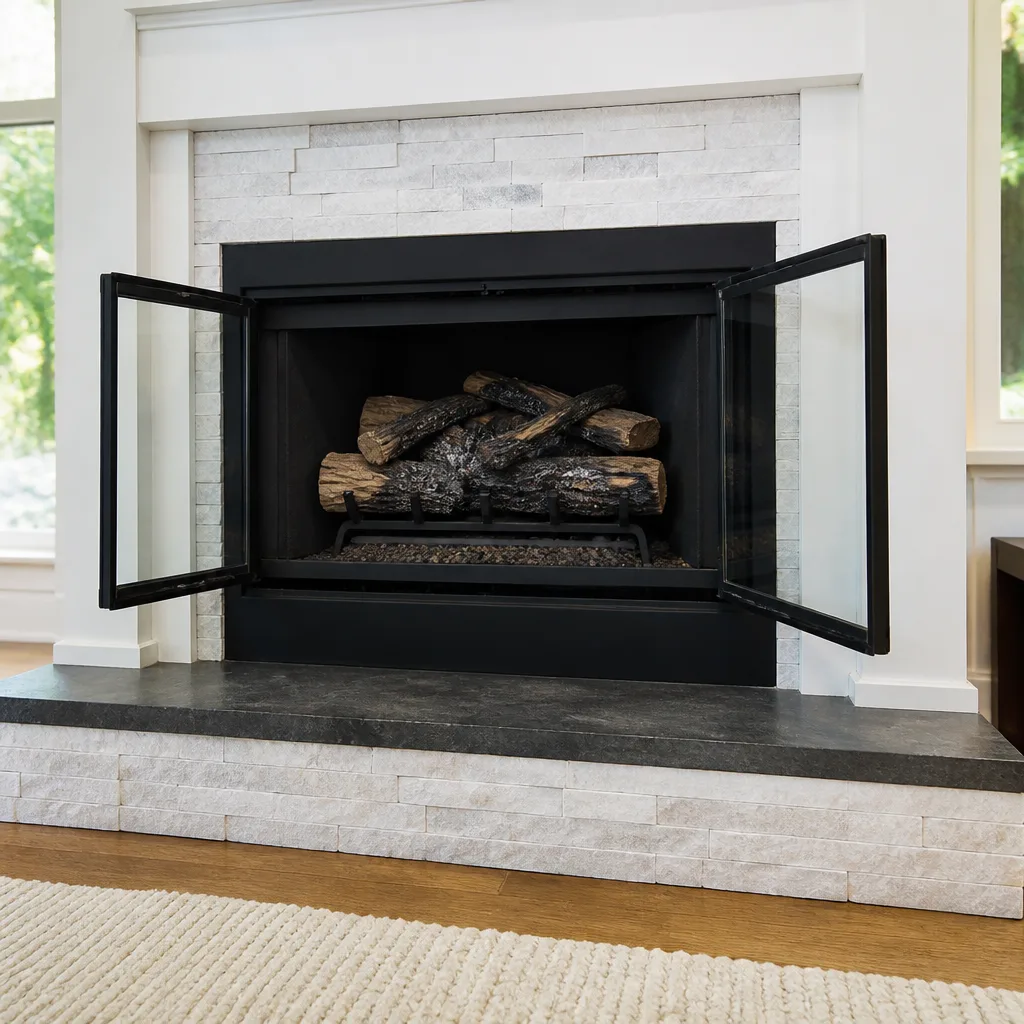
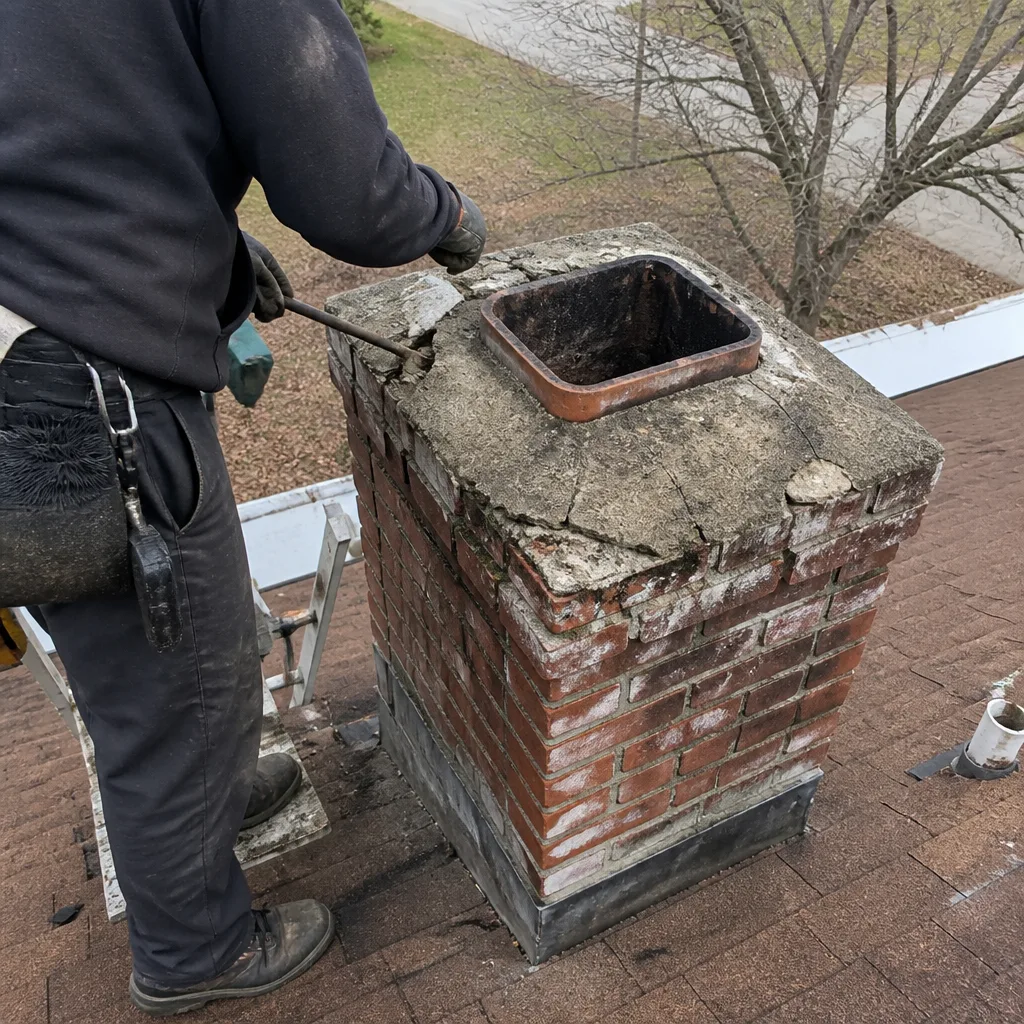 Before
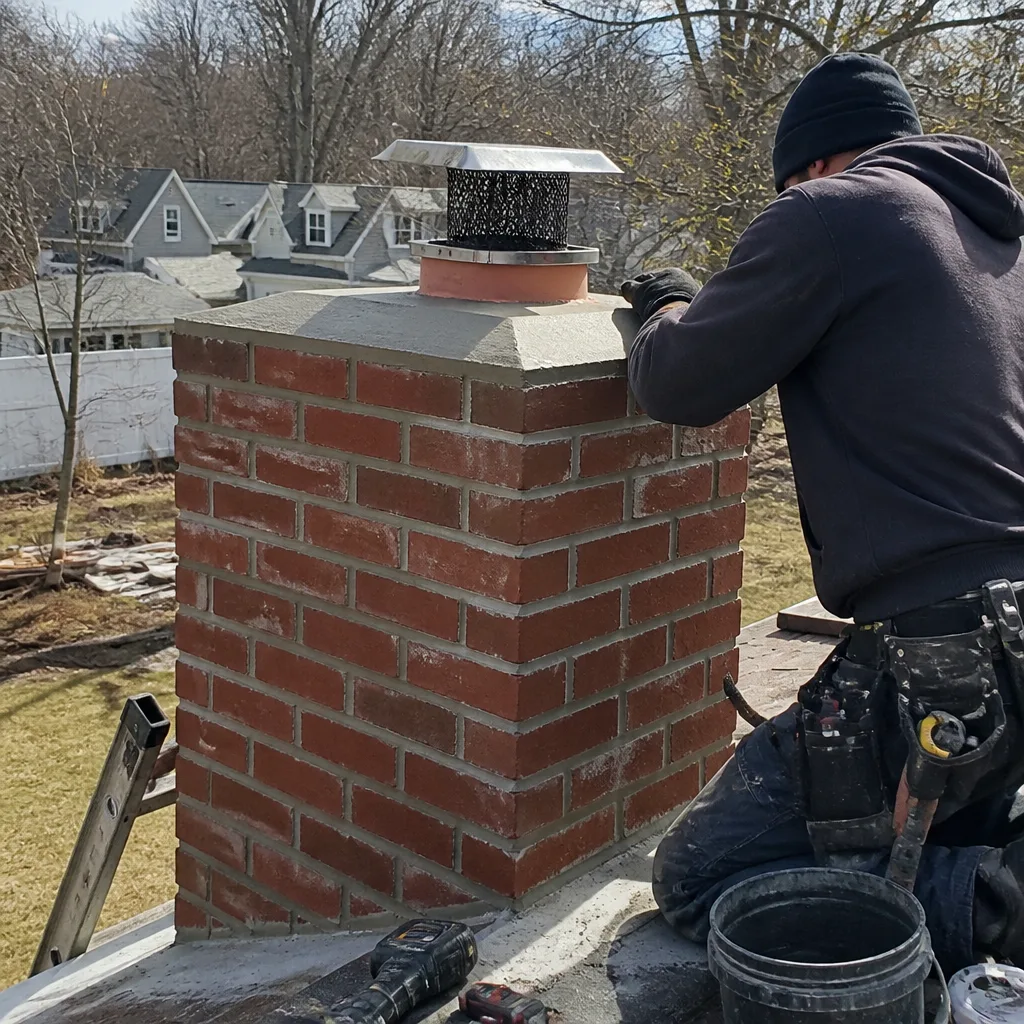 After
After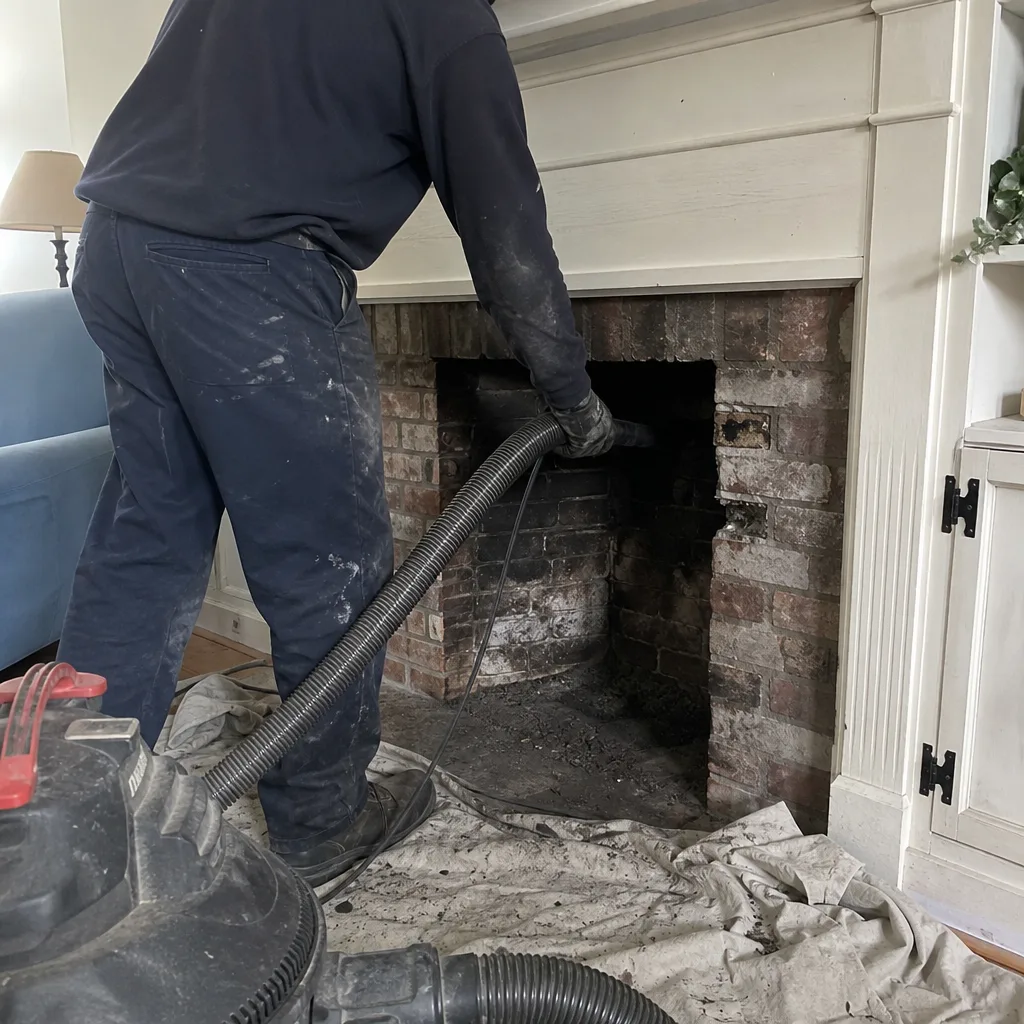 Before
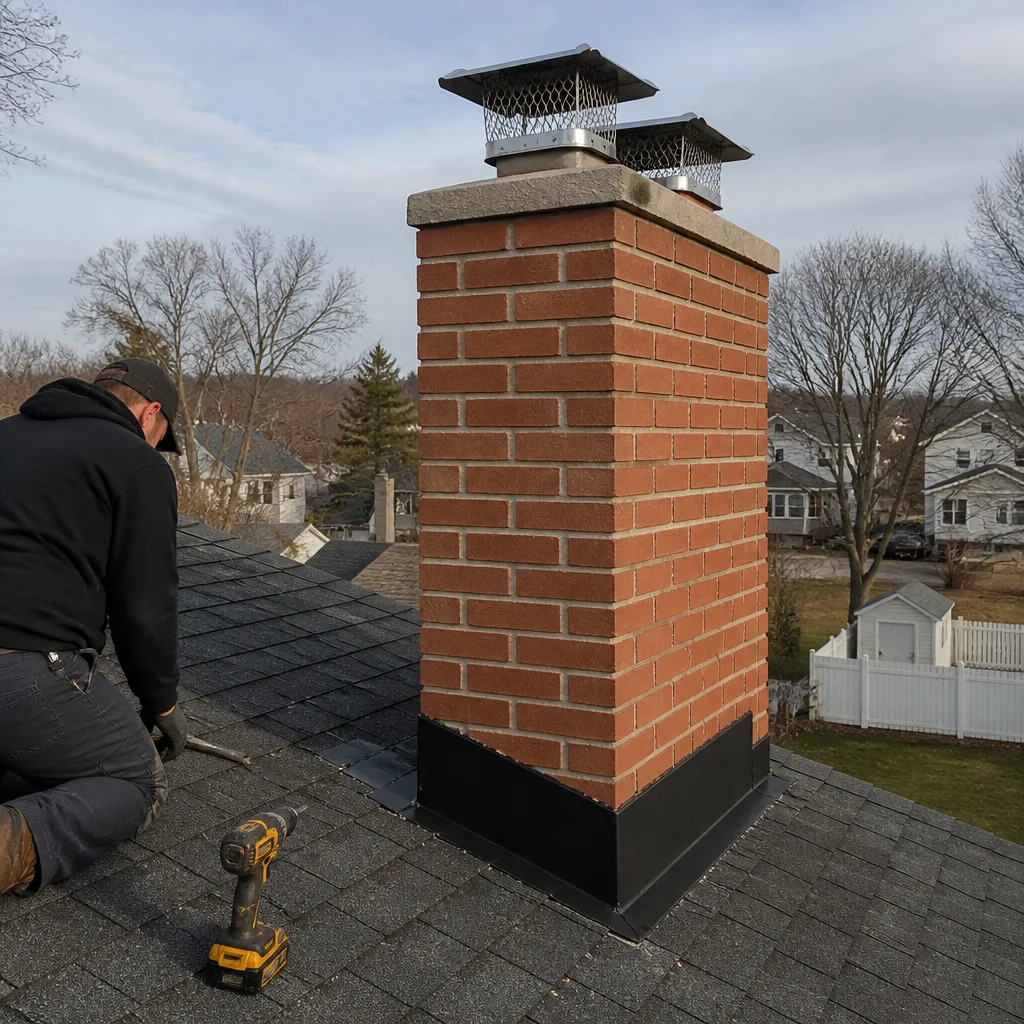 After
After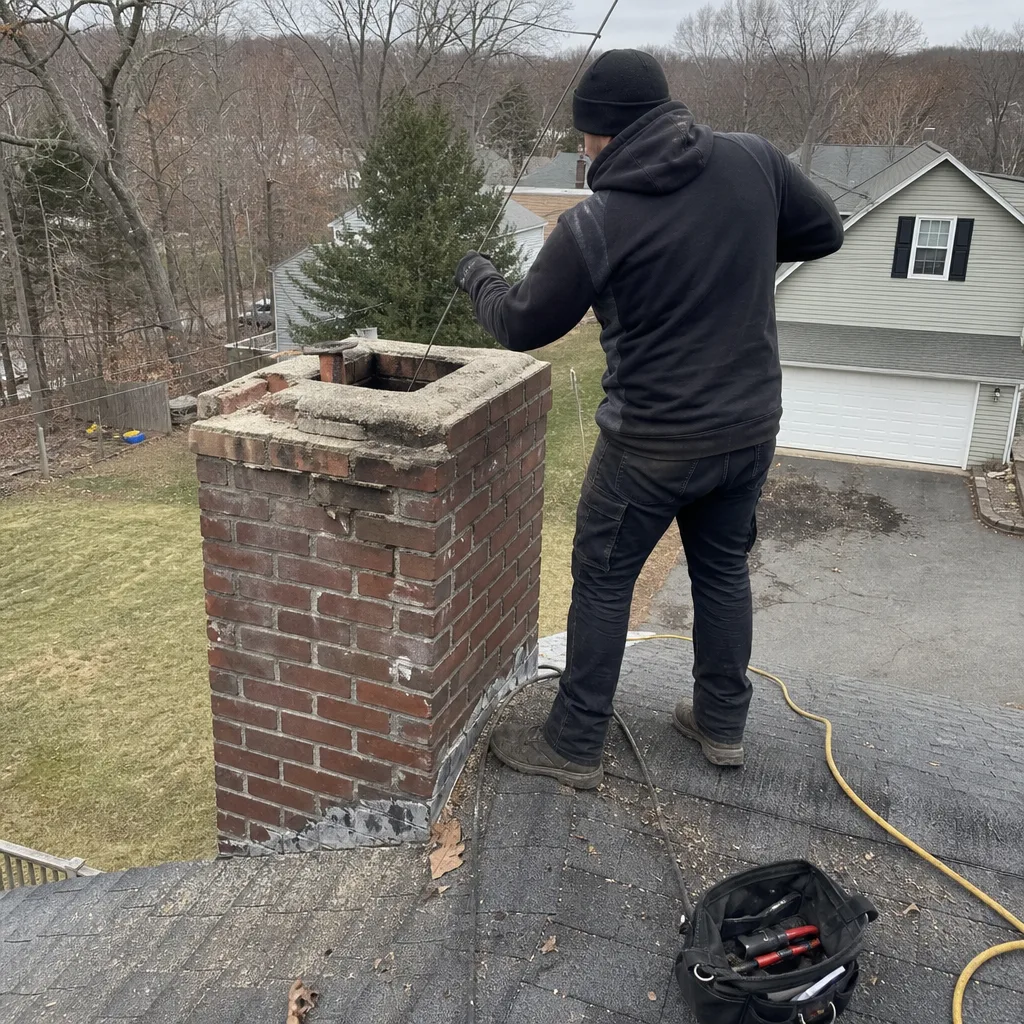 Before
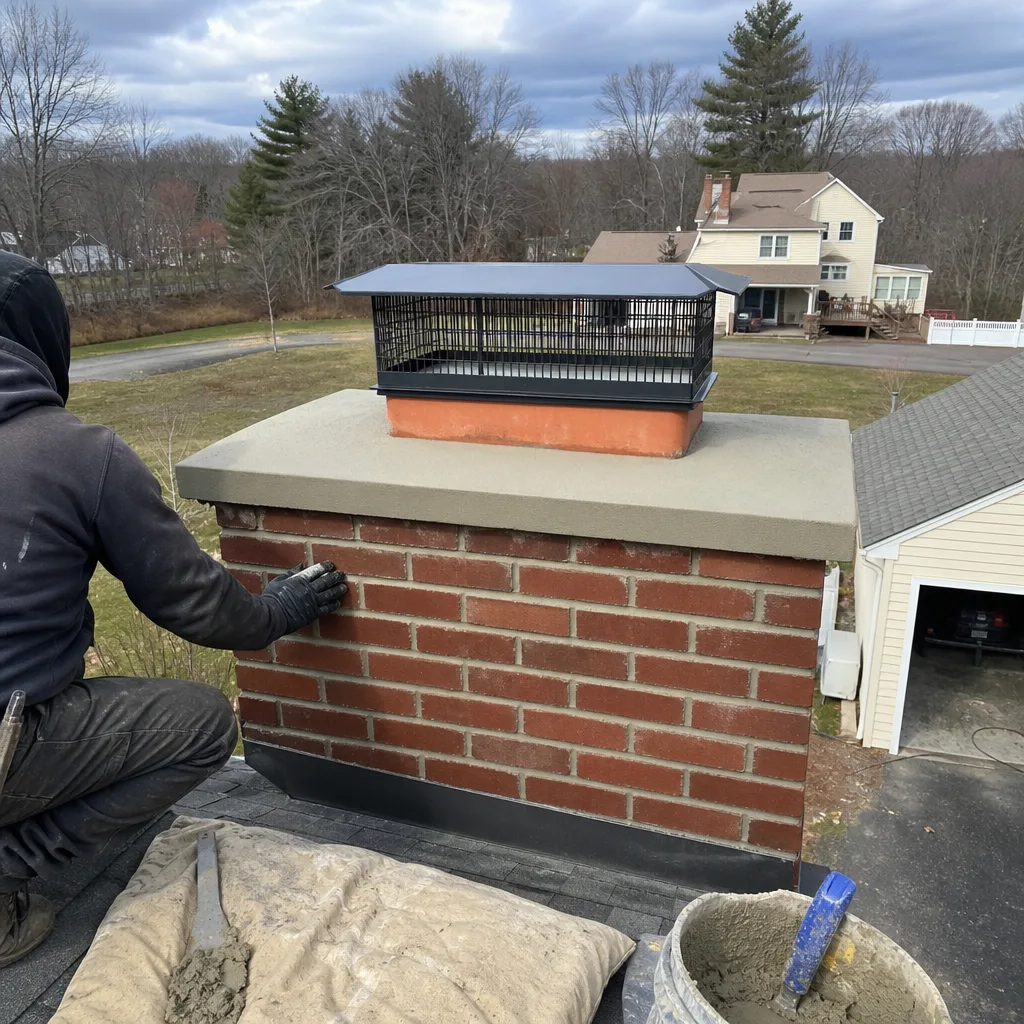 After
AfterDIY vs Professional Chimney Cleaning: The Haverhill Homeowner’s Decision Guide
Here’s the thing most guides won’t tell you straight: you can sweep your own chimney, and for a lightly used gas fireplace with a clean liner, it might be perfectly reasonable. But the problem isn’t the brushing. It’s that you won’t know what you’re looking at when you shine a light up the flue. That gap, the space between doing the task and understanding what the task reveals, is where the real risk lives. This guide walks through both paths honestly, with Haverhill’s older housing stock, its damp winters, and its particular chimney problems front and center. For seasonal chimney cleaning care specific to Haverhill, see our year-round homeowner’s guide.
Quick Answer
DIY chimney cleaning can work for a cautious homeowner with a simple, well-maintained flue, basic tools, and a firm grasp of the mess involved. But for most Haverhill homes, especially those built before 1980 with clay tile liners and active wood-burning fireplaces, a professional sweep is the safer call, because the real value isn’t the brushing. It’s the trained eye that catches liner cracks, stage-two creosote, and crown damage before they become a chimney fire or a carbon monoxide problem.
Table of Contents
- What DIY Chimney Cleaning Actually Involves
- What a Homeowner Cannot Reliably Self-Assess
- When DIY Makes Genuine Sense
- When a Professional Is the Only Call
- The Real Cost of Cleaning Up a DIY Job Gone Wrong
- Productive DIY Maintenance Between Professional Sweeps
- Common Mistakes to Avoid
- When to Call a Professional
- Frequently Asked Questions
What DIY Chimney Cleaning Actually Involves
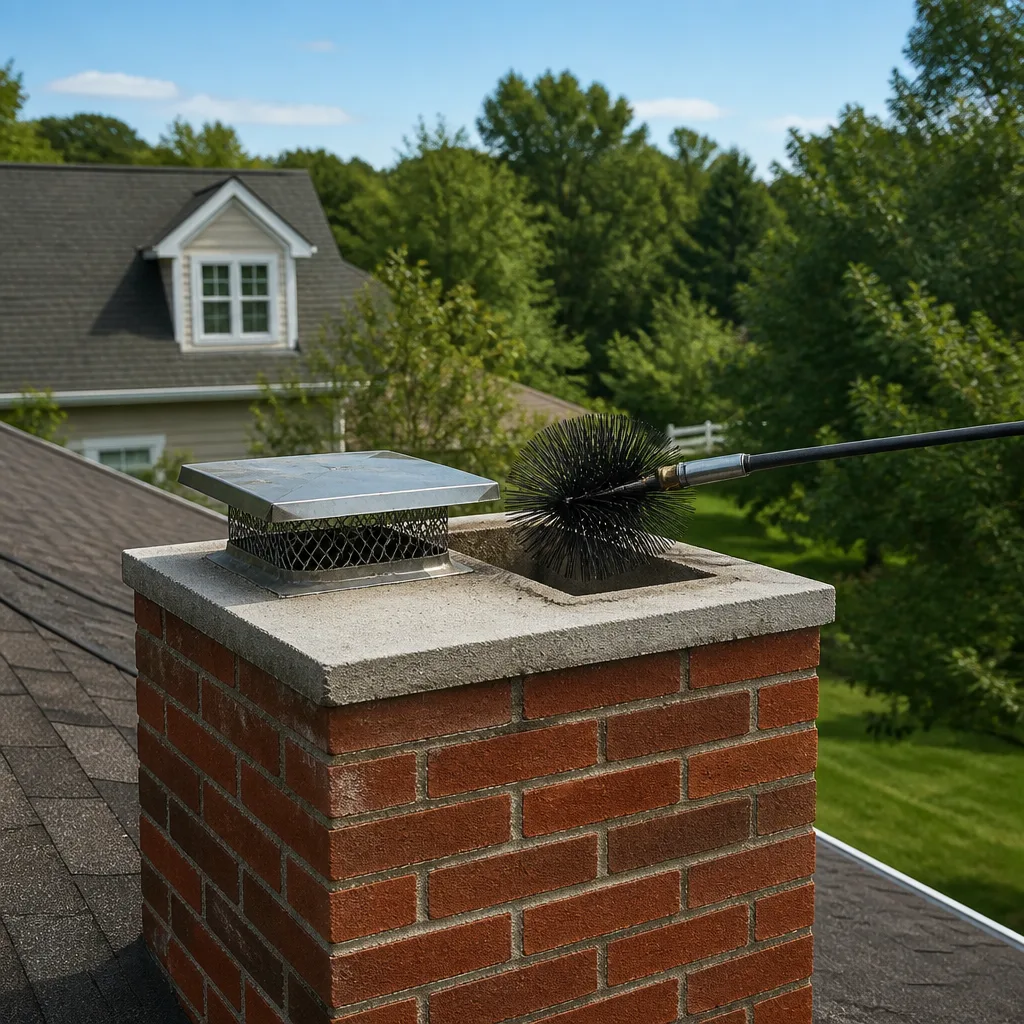
Let’s strip the romance out of it. DIY chimney cleaning means buying or renting a set of brushes sized to your flue, climbing a ladder to the roof, removing the cap if one is installed, and running the brush down and back up until the walls feel cleaner. Then you climb down, go inside, and deal with the soot that has found its way onto the hearth, the carpet, and possibly the curtains. A basic wire brush kit runs $30 to $80. A roof ladder you trust and a fall-arrest setup, if you’re doing this right, is another layer of cost and caution. None of it requires a license in Massachusetts, but it requires steadiness on a roof, a willingness to work overhead, and patience for a dusty, repetitive job.
Wendell has watched plenty of Haverhill homeowners start this project on a Saturday morning and call us by Monday because the smell wouldn’t leave the living room. The brushing itself is the easy part. The sealing off of the fireplace opening, the drop cloth work, the vacuum strategy that doesn’t just blow fine soot through the whole first floor, that’s where people lose the morning and sometimes the weekend. If your flue is straight and the creosote is light, a careful homeowner can get the job done in a few hours. If there are offsets in the flue, or if the creosote has glazed, the brush will skip right over it, and you’ll have done a lot of ladder work for very little safety gain.
What a Homeowner Cannot Reliably Self-Assess
Brushing a flue is not the same as evaluating a flue. Here’s what we mean. When Wendell runs a camera up a Haverhill chimney, he’s looking for things a brush can’t reveal: hairline cracks in clay tile liners, missing mortar joints, a crown that’s quietly letting water in, a smoke chamber with gaps that allow heat and carbon monoxide into the wall cavity. These are not rare findings. In older Haverhill neighborhoods like Highlands and Riverside, where chimneys date to the 1920s and earlier, we see liner deterioration on a regular basis. A homeowner can brush the soot away and still have a dangerous flue. A trained sweep can see the crack, measure the creosote stage, and tell you whether it needs attention now or can wait a year.
Creosote deserves its own paragraph. First-degree creosote is a brush job, flaky and dusty. Second-degree is a harder, tar-like deposit that a standard wire brush struggles with. Third-degree is a glaze, shiny and hardened, and it doesn’t brush off. It requires chemical treatment or mechanical removal by someone who knows what they’re doing. The homeowner’s eye, shining a flashlight up from below, often cannot tell the difference between stages. The homeowner’s nose, however, will notice stage two or three when a hot fire makes the house smell like a campfire that doesn’t go away. In our experience in Haverhill, that’s the second most common reason we get a call after a DIY attempt. The first is the smell of smoke backing into the living room because the flue wasn’t actually cleared.
When DIY Makes Genuine Sense
We’re not here to tell you DIY is always a mistake. It isn’t. Here’s the narrow set of situations where we’d say a cautious homeowner can reasonably do it themselves:
- The chimney serves a gas fireplace or a wood stove used only occasionally, fewer than ten burns a season.
- The flue is straight, inspected within the last two years, and known to have an intact liner, whether clay tile or stainless steel.
- The creosote, when you look, is light and dusty, not shiny or sticky.
- The homeowner is comfortable on a ladder, has a spotter, and understands the roof pitch before climbing.
- The goal is maintenance between professional sweeps, not a replacement for them, and a professional visit is already on the calendar for the fall.
What we’re describing is a homeowner who does their own light upkeep because they know the flue’s condition and they’re staying ahead of buildup, not catching up on years of neglect. If that’s you, and you live in a newer Haverhill subdivision with a straightforward roof and a modern fireplace, go ahead. Keep a sweep on the schedule once a year regardless. Chimneys break in the off-season too, and the camera that goes up once a year catches what the brush can’t.
When a Professional Is the Only Call
The line sits in a specific place. If any of the following is true, skip the DIY and call. You’re not saving $200. You’re risking a $2,000 problem going unseen, and the math doesn’t forgive that.
- You burn wood as a primary or frequent heat source in a Haverhill winter.
- The house is older, especially pre-1980, and the chimney has not had a camera inspection in your ownership.
- You smell smoke, creosote, or a campfire smell indoors when the fire is not lit.
- You see white staining on the brick outside, a sign of water infiltration, or crumbling mortar at the crown.
- The chimney has an offset or a shared flue, or you simply haven’t seen the inside of it in years.
- You’ve noticed hearing what sounds like animals, birds, or dripping water from the flue.
None of these are brushing problems. They’re diagnostic problems, and the danger in DIY is that you’ll brush the symptom while the cause keeps working. A sweep from Chimney Cleaning & Sweep in Haverhill brings the camera and the trained eye, and you see what they see, on the spot, before you spend another dollar. The camera footage and a plain-English verdict, every time, no exceptions. That’s not marketing language. That’s how Wendell has run the business since 1999, because a homeowner who sees the crack with their own eyes doesn’t doubt the recommendation.
The Real Cost of Cleaning Up a DIY Job Gone Wrong
Let’s get specific about money, because this is where the DIY decision usually tips one way or the other. A professional sweep in Haverhill typically runs between $180 and $350, depending on flue size, creosote level, and whether the fireplace or stove has been maintained. The DIY kit costs $50 to $100, so the savings on paper is $100 to $250. Here’s what we see go wrong, and what it costs.
- The soot migration problem. You brush the flue, the soot finds its way into the house, and now you’re calling a cleaner for the upholstery and the carpet. Carpet and furniture cleaning after a soot event in Haverhill runs $150 to $400 for a single room.
- The smell that won’t leave. Glazed creosote that a brush can’t remove keeps off-gassing when the fireplace warms. The diagnostic visit to figure out why the house smells like smoke costs $150 to $250, and it often leads to a professional sweep anyway, which is another $180 to $300.
- The missed crack. This is the expensive one. A DIY clean misses a liner crack, water keeps getting in, and by the time the problem announces itself, you’re looking at a liner repair or rebuild. A stainless liner installation in Haverhill runs from $1,800 to $4,500. The $200 you saved becomes a $2,000 problem because no one looked with a camera.
We bring this up not to scare you but to be straight about the math. The cost of the sweep isn’t the brushing. It’s the look. The camera footage and the trained eye catch a $200 creosote job before it becomes a $2,000 rebuild. Once a year, burn or no burn. Chimneys break in the off-season too, and the sweep who sees the early crack saves you the liner. If you’ve already done the DIY and something smells off, Top Hat Chimney home will come look. No-hassle upfront pricing before a single tool comes off the truck, and the number you hear on the phone is the number on the invoice.
Productive DIY Maintenance Between Professional Sweeps
Here’s where a homeowner can usefully do their own work without needing a license or a ladder. These are the things we tell our Haverhill customers to do between sweeps, so that the annual visit catches everything and you’re never surprised in November.
- Watch the smoke. A fire should vent cleanly. If smoke lingers in the room, rolls back down the chimney, or leaves a haze, that’s a draft or blockage problem, not a normal fireplace behavior. Note it and mention it when the sweep comes.
- Log the burns. Keep a rough count of fires per season. Ten burns a year and forty burns a year are different maintenance schedules. Your sweep will want to know.
- Check the exterior brick after rain. Wet brick, white efflorescence, or crumbling mortar at the top of the chimney is water ingress. Photograph it with your phone. The photos become the record when Wendell shows up.
- Look for critters. Haverhill has its share of squirrels, raccoons, and birds looking for a warm flue. If you hear scratching or chirping, don’t light a fire. Call for a cap and a sweep.
- Test the damper. Open and close it a few times before the season. A sticky damper is a sign of rust or debris, and it affects draft and indoor air quality.
- Sniff on warm days. Your nose is a detection tool. A creosote or smoke smell when the fire is cold means buildup is present and off-gassing, and it’s worth a call before the burning season starts.
None of this requires roof work. It requires attention, a camera phone, and the discipline to write down what you see. When the professional sweep comes, you’ll have a record that makes the visit faster and more accurate. If you want the full picture of what a sweep involves, our Chimney Cleaning & Sweep in Haverhill page walks through it step by step.
Beyond Brushing: What Else a Sweep Sees
A chimney is a system, not a pipe. The flue is one part. The crown, the cap, the flashing, the smoke chamber, the firebox, and the damper all interact, and a failure in one sends problems through the rest. This is where a local sweep’s value compounds. Here’s what we’re evaluating on a typical Haverhill home, especially the older stock in the Acre and Lower Avenues neighborhoods.
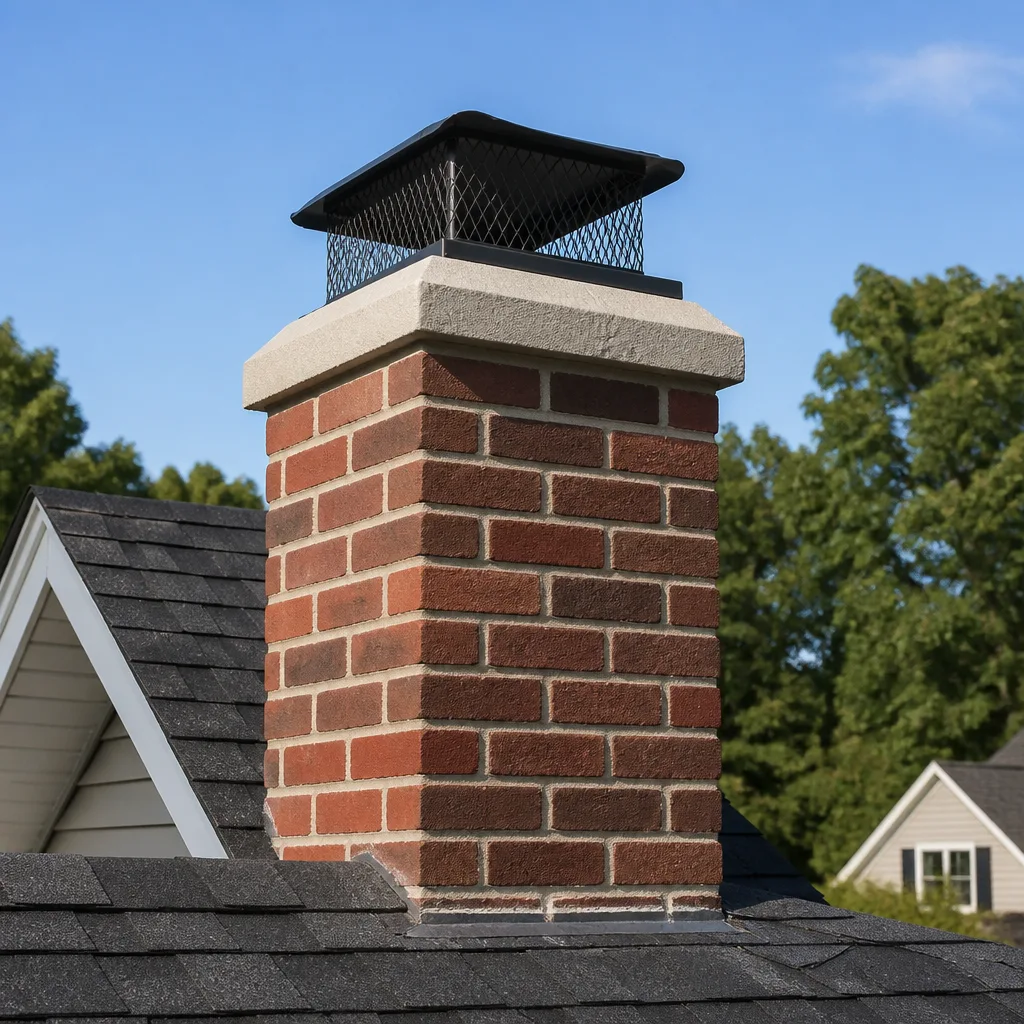
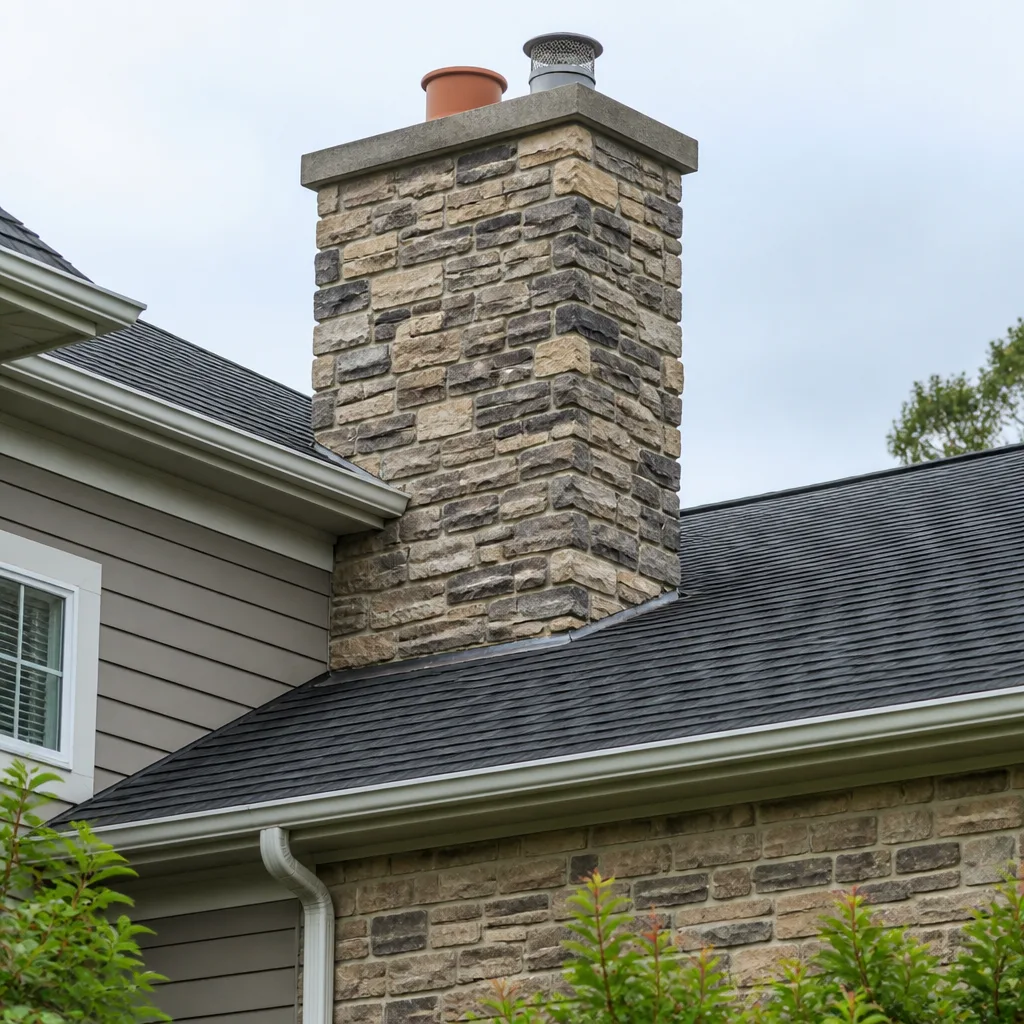
The crown. This is the concrete cap at the top of the chimney. In Haverhill’s freeze-thaw winters, crown cracks are inevitable over time. Water gets in, freezes, expands, and widens the crack. A homeowner on the ground rarely sees it. A sweep on the roof examines it every visit. Crown repair is a few hundred dollars when caught early in Haverhill; a rebuild after years of neglect is a different number entirely.
The cap and spark arrestor. Haverhill requires homes to meet current Massachusetts codes for chimney caps in many cases, and a missing or damaged cap is an open invitation for rain, animals, and debris. We install and service caps as part of a standard sweep visit, and it’s a cheap fix next to a water-damaged liner.
The smoke chamber. Above the firebox and below the flue, this area takes the most heat abuse. In older Haverhill chimneys built with corbeled brick, the mortar often erodes, leaving gaps. Heat and gases can migrate into the house framing. This is not visible from the roof or from the hearth, which is why the camera is non-negotiable.
The damper and firebox. A rusted damper plate, cracked firebrick, a gap between the firebox and hearth, all of these are everyday findings on a sweep visit. None of them are brushing problems, and all of them matter for safety and efficiency. If you’ve got questions about the whole system, our Chimney Repair in Haverhill page covers what’s fixable and what’s a rebuild.
Common Mistakes to Avoid
- Treating a chimney as a hole in the roof instead of a system. The flue is one part. The crown, cap, flashing, smoke chamber, and damper all work together. DIY brushing ignores most of them.
- Assuming a metal liner means no maintenance. Stainless steel liners still collect creosote and still need inspection. They crack less than clay, but they’re not maintenance-free.
- Skipping the roof safety gear. Haverhill roofs are steep on the older colonials and capes. A fall from a second-story roof is a hospital visit or worse. If you’re not equipped for roof work, don’t do roof work.
- Brushing a glazed flue and calling it clean. The brush polishes the surface of third-degree creosote without removing it. The fireplace looks fine, the flue is still a fire hazard, and the homeowner has false confidence.
- Using the wrong size brush. A brush too small for the flue leaves creosote in the corners. A brush too large can get stuck in an offset. Professionals size the brush to the liner dimensions.
- Not sealing the fireplace opening before brushing. This is the mess mistake. Without a proper seal, fine soot travels through the house, and you’ll be cleaning it out of fabric and ductwork for months.
- Putting off the sweep because the fire hasn’t been lit. Creosote doesn’t disappear in the off-season. Moisture, animal debris, and structural decay continue. The annual sweep is a checkup, not just a cleaning.
When to Call a Professional
Call a professional when the chimney hasn’t been inspected with a camera in more than two years, when you burn wood regularly, when something smells wrong, when water is staining the brick, or when you simply don’t want to be on a ladder with a brush in one hand and a phone in the other. If you’re unsure where to start, read our How to Hire a Chimney Cleaning Contractor in Haverhill: A Step-by-Step Guide. Call when the cost of being wrong is higher than the cost of the sweep. Top Hat Chimney offers free estimates in Haverhill, and there’s no trip charge inside the county. Reach us at (978) 724-7935, and a live person answers every call, around the clock. It may well be Wendell himself.
Frequently Asked Questions
A professional sweep in Haverhill typically costs between $180 and $350, depending on flue size, creosote level, and whether the home has a standard fireplace, a wood stove, or multiple flues. That price includes the brushing, the visual inspection, and the camera work that catches what a brush can’t. Call (978) 724-7935 for an exact quote, estimates are free.
Once a year, burn or no burn. The National Fire Protection Association recommends annual inspection and cleaning as needed, and Haverhill’s damp climate and older housing stock make that the right rhythm for most homes. If you burn more than two cords a season, you may need a mid-season check as well.
For a straight, simple flue with light creosote and a homeowner comfortable on a roof, a careful DIY sweep can be done. But the risk is rarely the brushing itself. It’s the inability to assess liner integrity, creosote stage, and crown condition from the ground. If you’re doing it to save money, make sure you’re not skipping the inspection that actually protects the house.
Creosote builds up in stages, and stage three is a glaze that a brush won’t remove. Beyond the chimney fire risk, you’ll see draft problems, smoke backing into the house, and water damage accelerating in the flue. In Haverhill homes with clay liners, skipping two or three years of sweeps often means a liner repair that costs far more than the skipped cleanings would have.
Yes, though usually less often. Gas fireplaces don’t produce creosote, but they can produce soot, moisture, and debris from animals or deteriorating mortar. An annual check, even if no brushing is needed, catches blockages and corrosion before they become a carbon monoxide problem. Don’t assume gas means no maintenance.
The only way to know is a camera inspection. Signs that point toward liner problems include smoke smell indoors, white staining on exterior brick, pieces of tile in the firebox, and poor draft. A camera shows the crack or gap directly. If you’ve been told you need a liner by another company, bring us the written estimate and we’ll give you a free second opinion, with the footage to prove it.
The Bottom Line
DIY chimney cleaning isn’t a sin, and we won’t pretend it is. For a straightforward flue in good condition, a careful homeowner with the right tools can manage light maintenance between professional visits. But the value of a professional sweep in Haverhill is not the brushing. It’s the trained eye, the camera footage, and the early catch on a crack or a glaze that would cost thousands if missed. Once a year, burn or no burn. Chimneys break in the off-season too. If you’re on the fence, call Wendell at (978) 724-7935 and ask him what he’d do, or browse our more guides & resources for Haverhill homeowners. He’ll tell you straight, even if the answer is that you don’t need him yet.
Written by Wendell Pike, Owner at Top Hat Chimney, serving Haverhill since 1999.