
Level 1 sweep and inspection to the NFPA 211 annual standard - flue, crown, cap, and flashing checked and photographed
Chimney sweep logs do not sweep chimneys. They loosen some creosote - which then falls where a brush and vacuum still have to collect it.
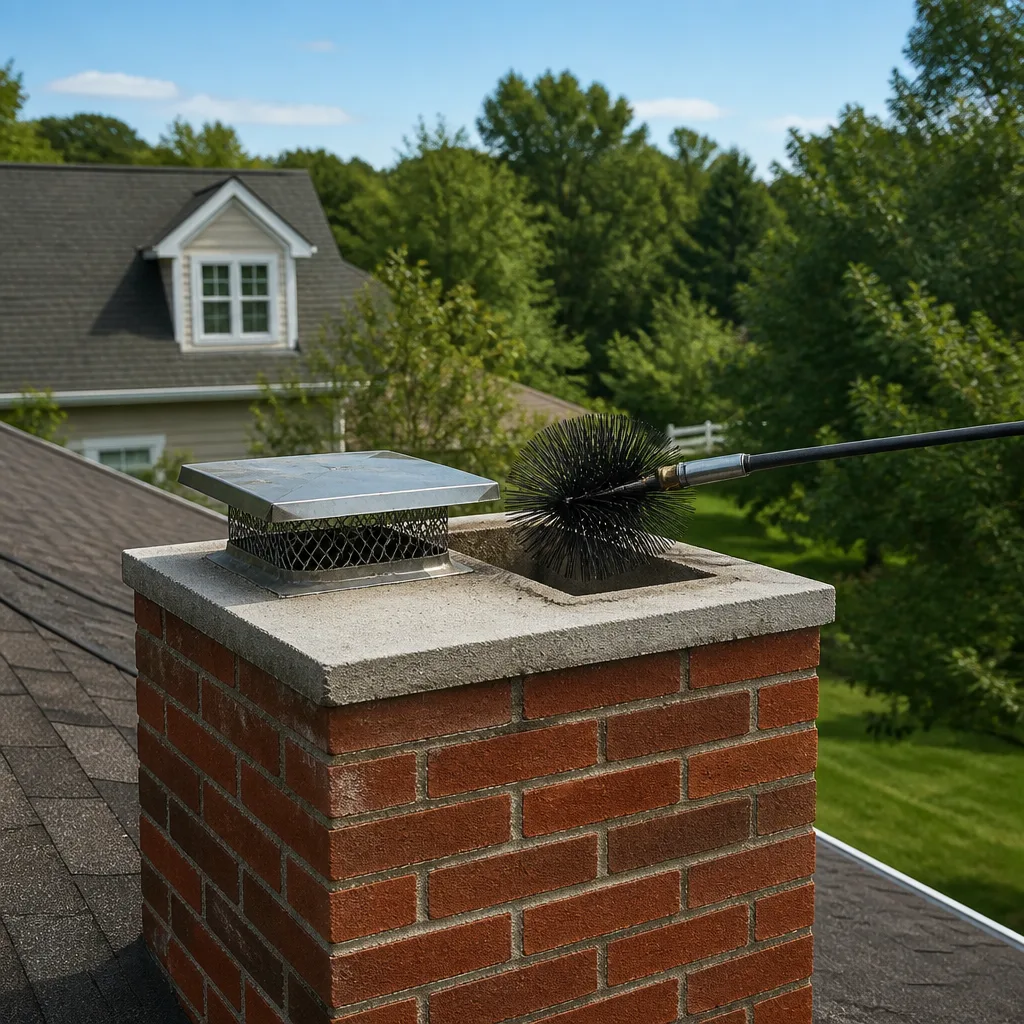
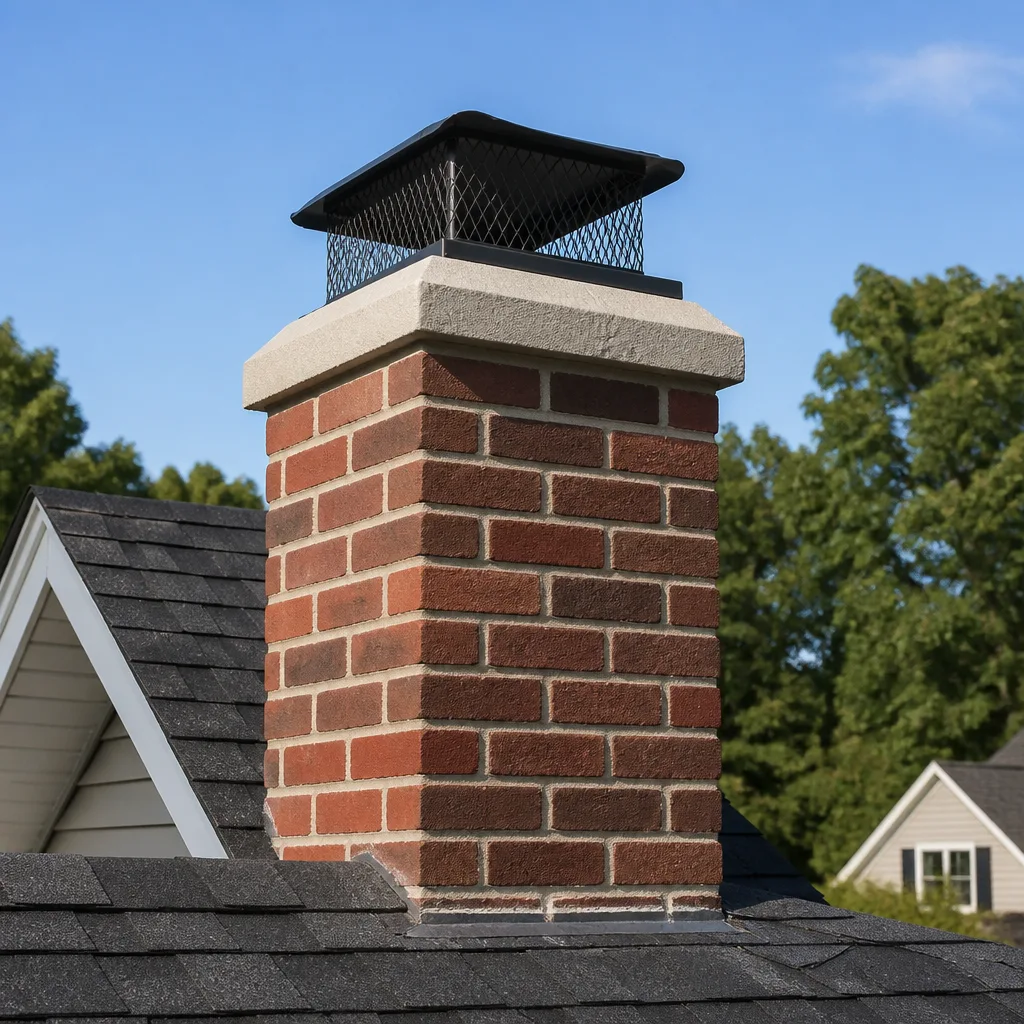
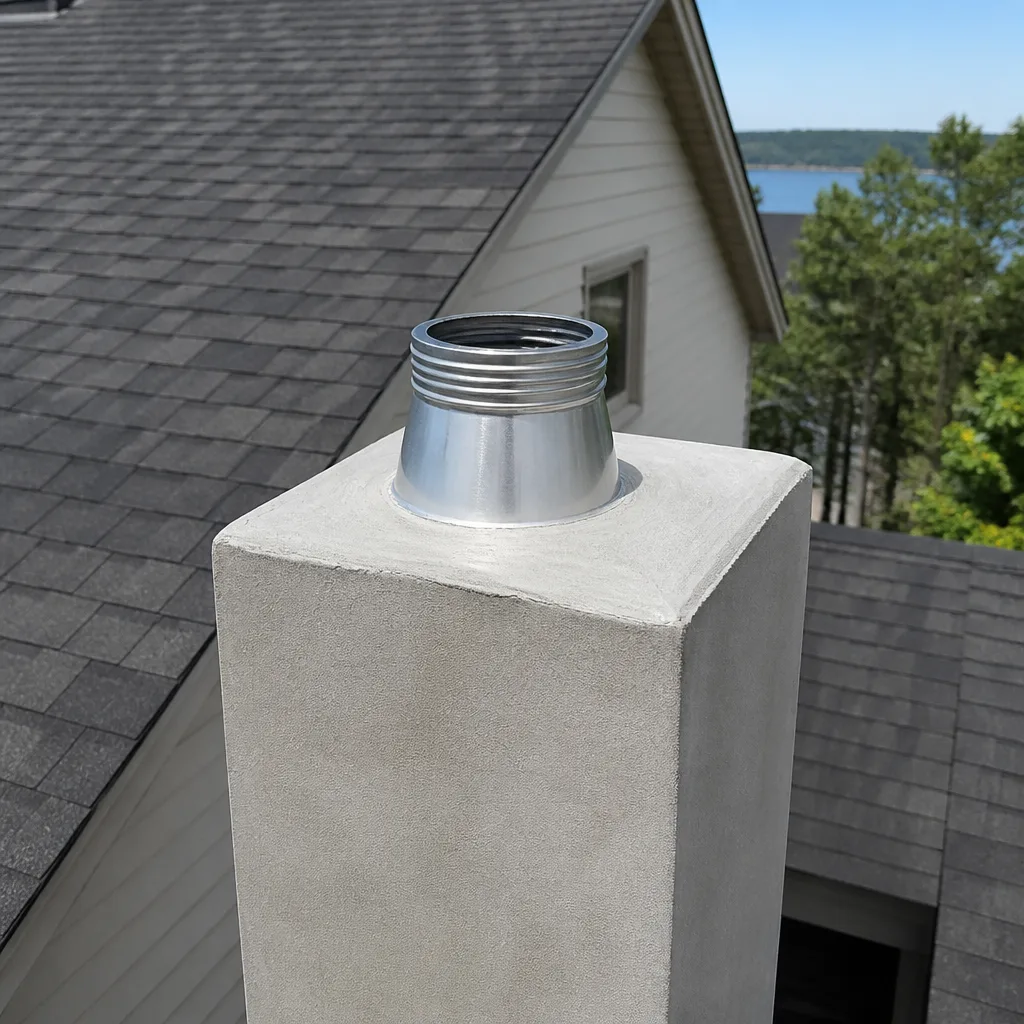
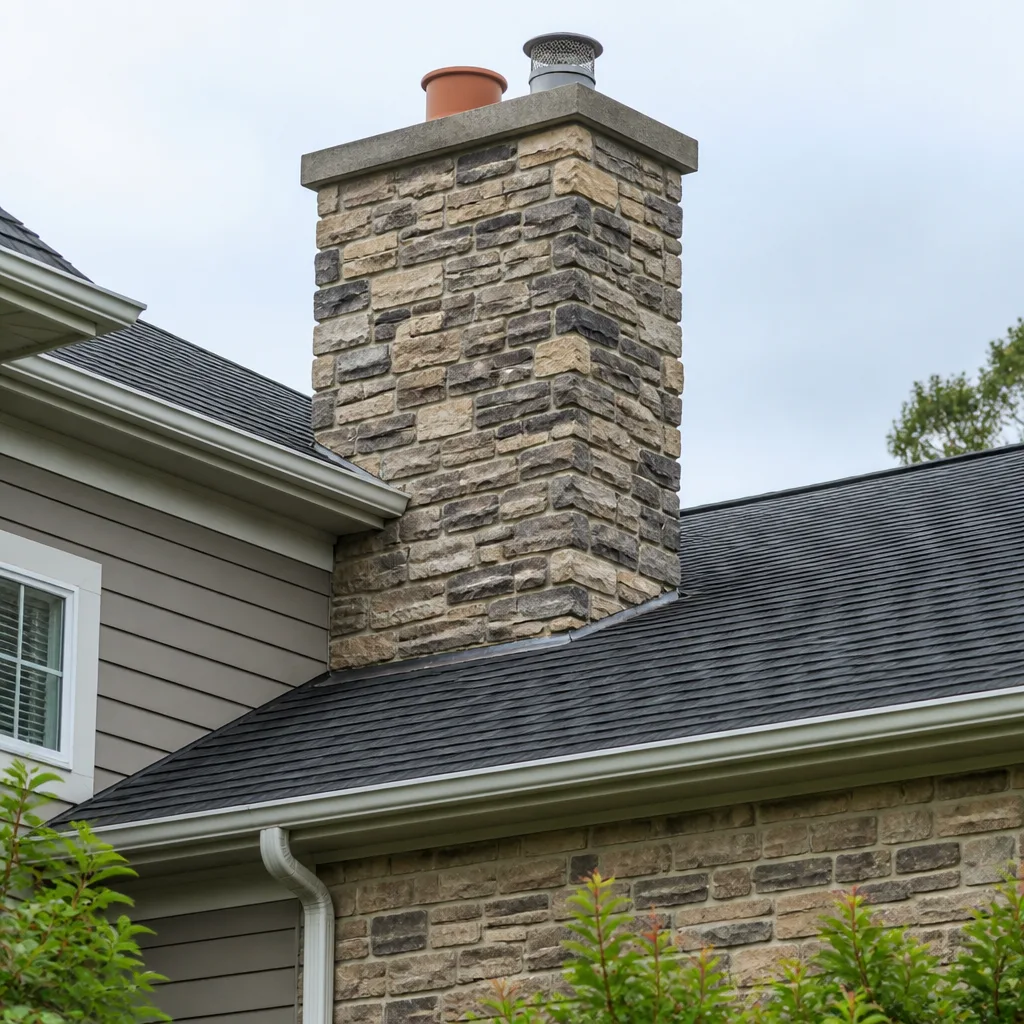
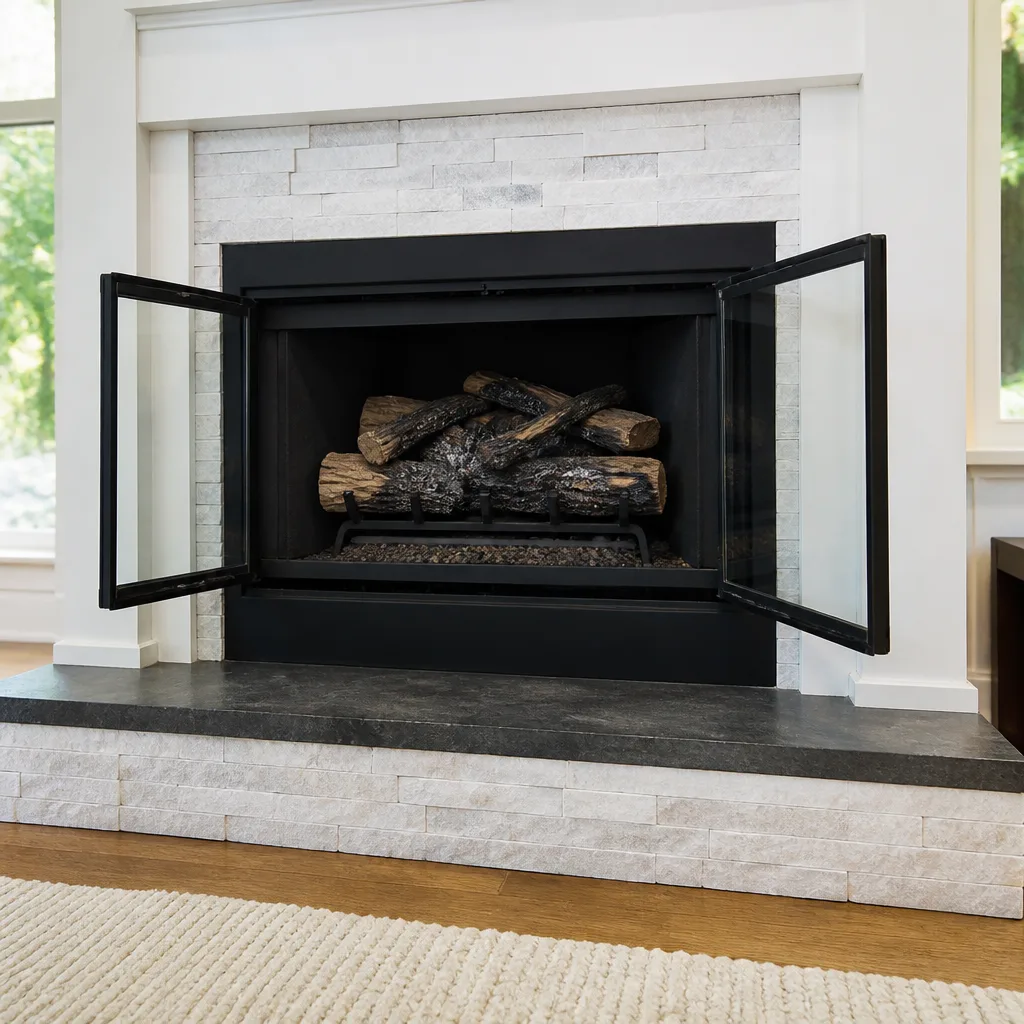
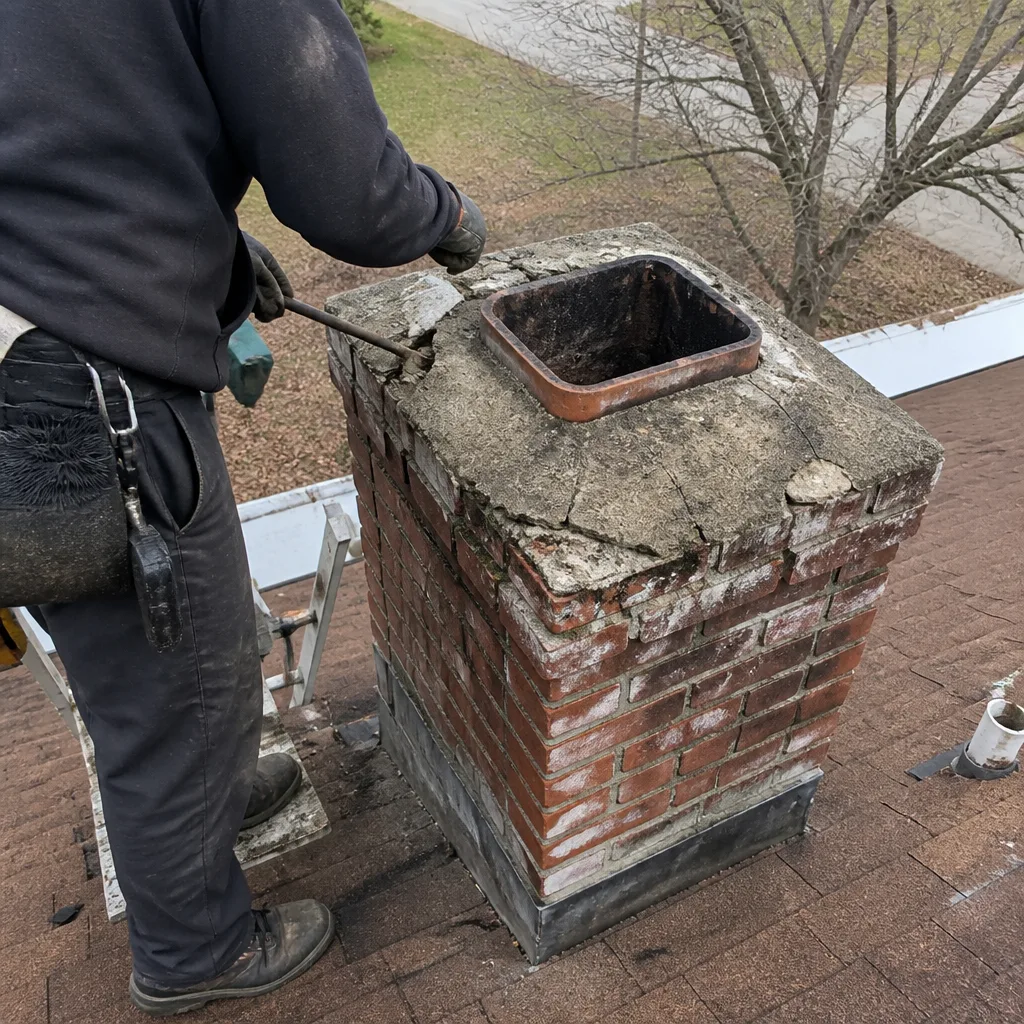 Before
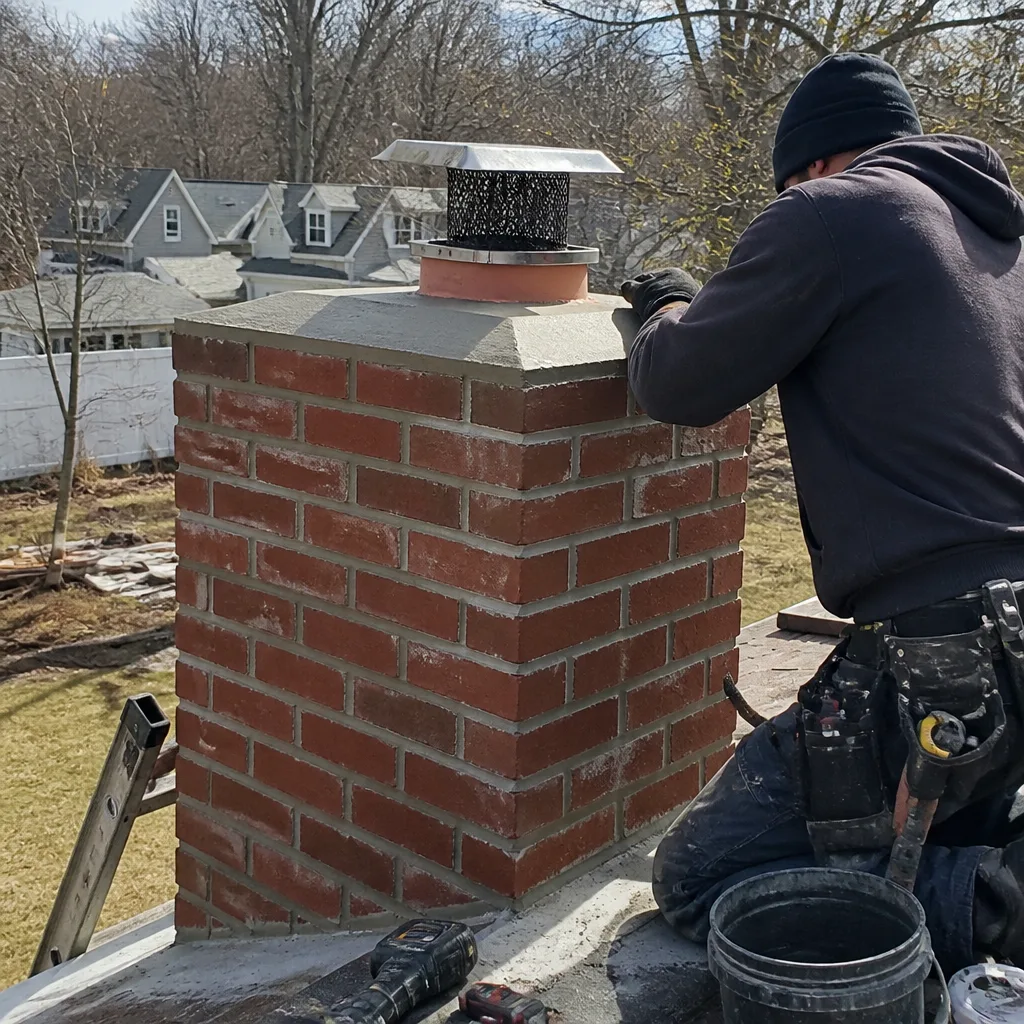 After
After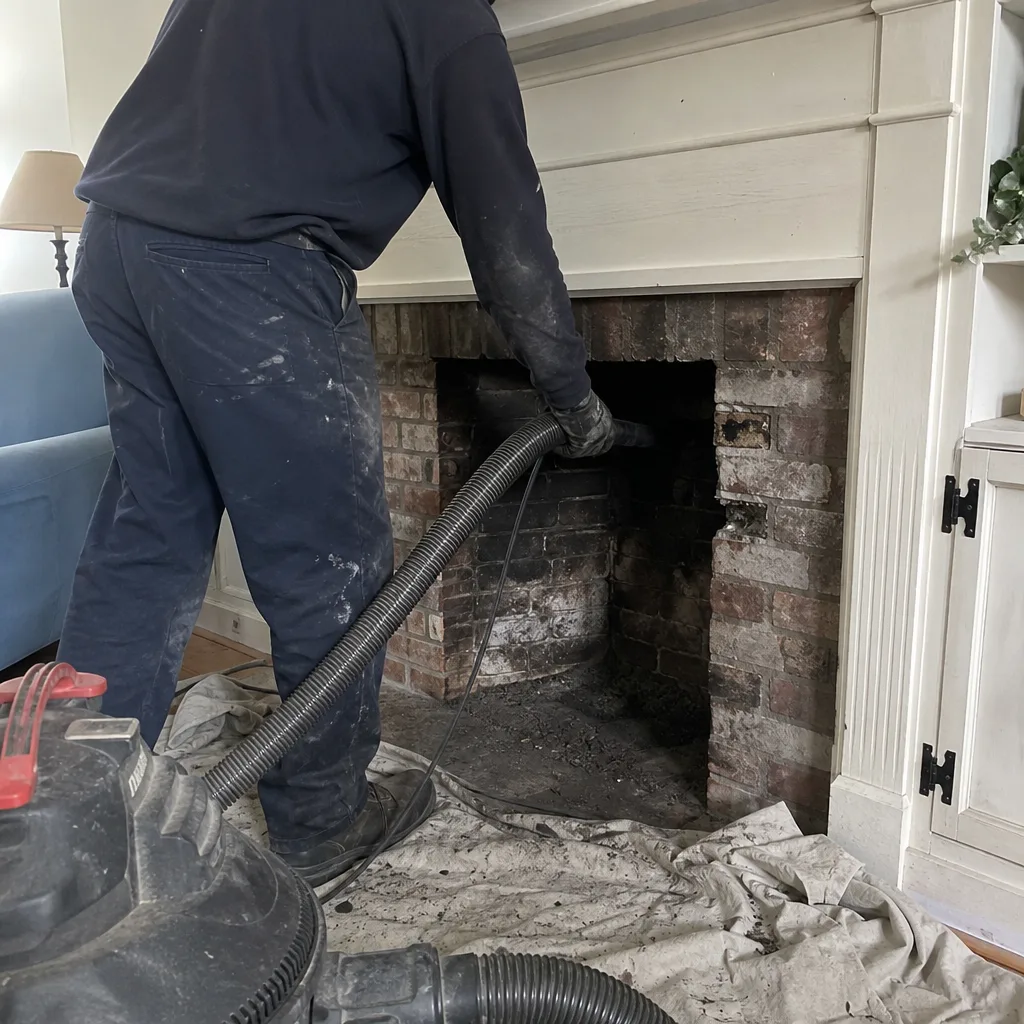 Before
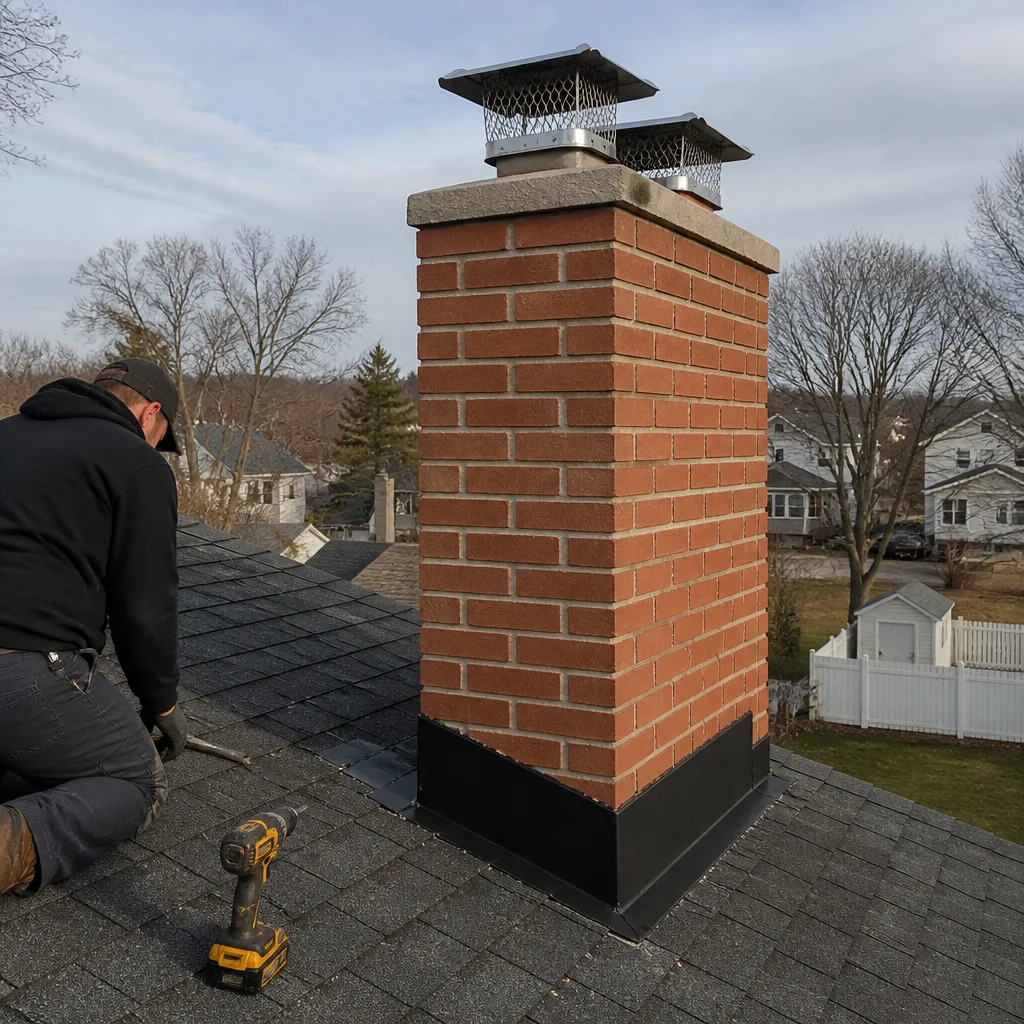 After
After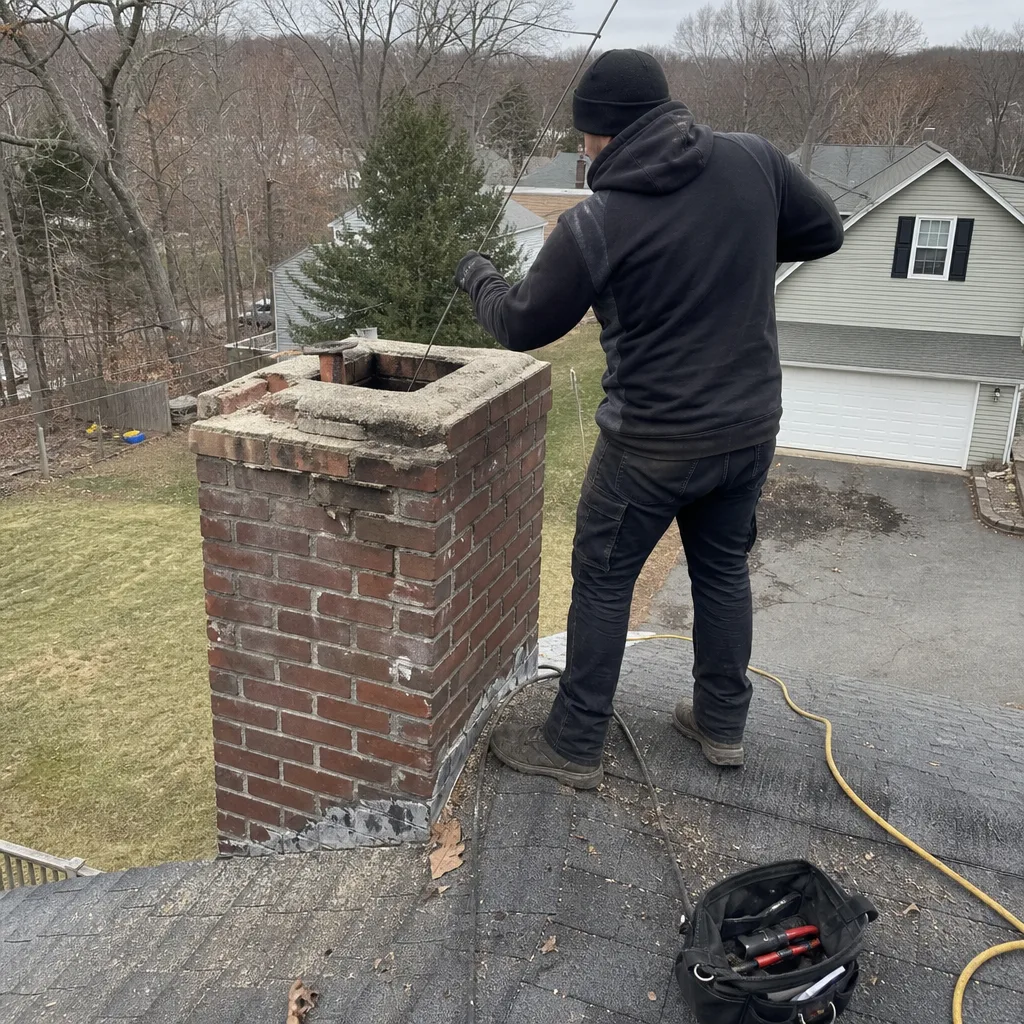 Before
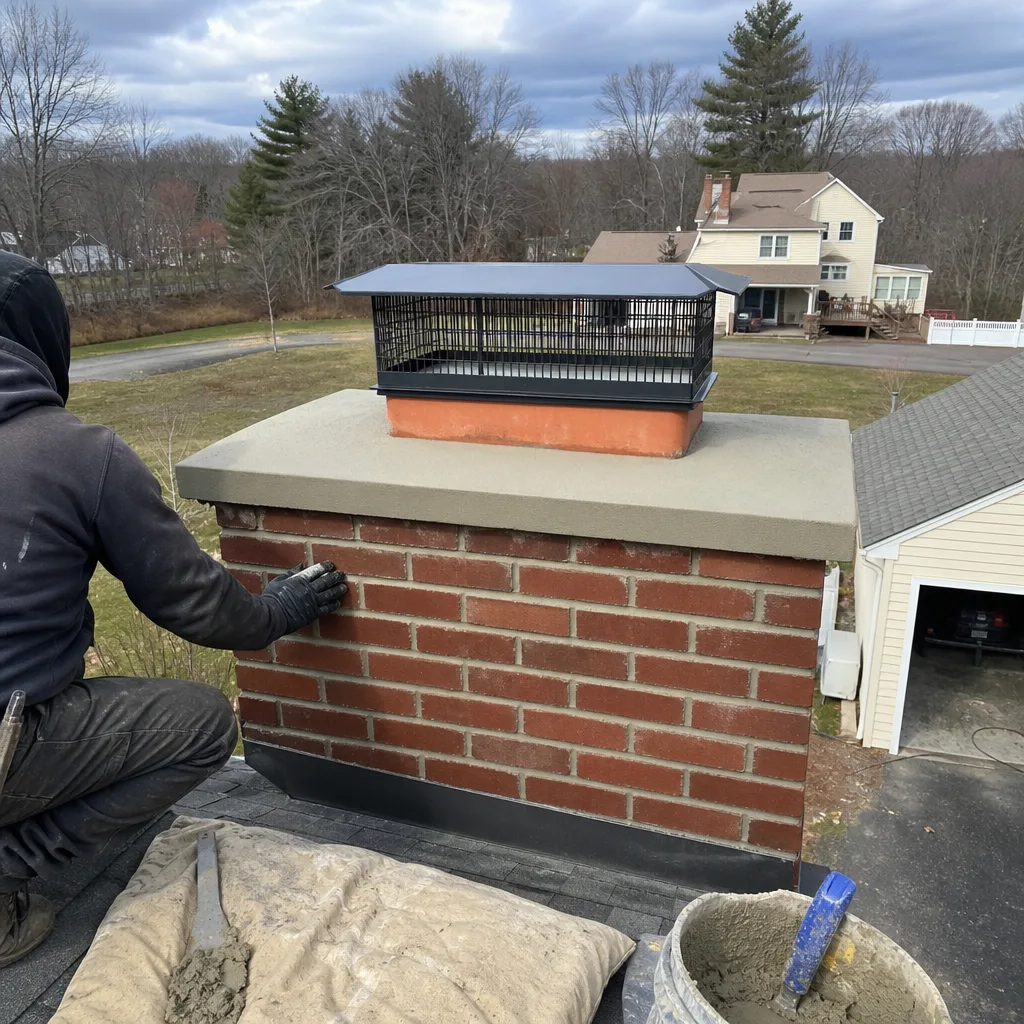 After
AfterHeatShield Chimney Cap Installation: The Haverhill Owner’s Guide
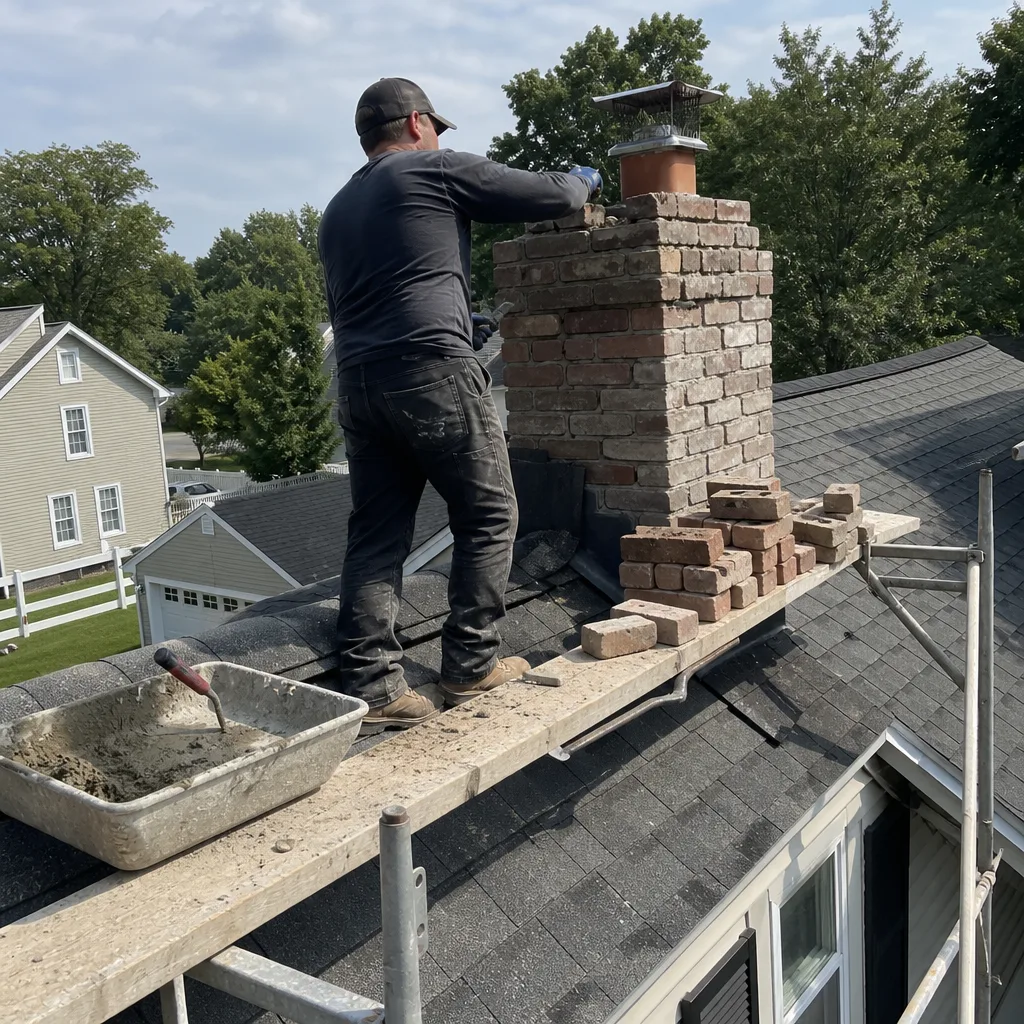
We stock and install HeatShield-compatible chimney caps throughout Haverhill, with most cap replacements running between $340 and $620 installed, depending on flue size and roof access. The cap itself is usually in the truck, and Wendell can typically have the swap done the same day he looks at it. Most homeowners discover the problem the hard way: a rust stain running down the chimney crown, water dripping into the firebox after a hard rain, or a cap that’s simply gone after a nor’easter. The good news is that a failed cap is one of the most straightforward fixes in chimney work, and it prevents a whole list of more expensive problems down the road.
Key Takeaways:
- HeatShield caps fit standard flue tile sizes; we verify the exact measurement before ordering anything.
- Installed replacement in Haverhill typically runs $340 to $620, all in.
- Most cap failures in the Merrimack Valley come down to two things: rust-through from road salt and wind, or animal damage.
- If the old mounting bracket is still solid, the swap takes under an hour in most cases.
Which HeatShield Models This Applies To
HeatShield makes caps in a fairly wide range of sizes, but the ones we see most often in Haverhill homes are the standard single-flue models sized for 8″ x 8″, 8″ x 13″, and 13″ x 13″ clay flue tiles. The multi-flue versions exist too, but they’re less common around here unless you’re running a larger colonial up near Bradford with a wide chimney. The simplest way to identify what you have is to look for a small stamped label on the underside of the lid or on the mounting band. If that label is gone, which it often is after a few New England winters, we measure the outside dimensions of the clay tile itself. That measurement, not the cap’s brand name, is what actually determines the replacement.
The OEM-vs-aftermarket question comes up a lot with HeatShield specifically. The honest answer: HeatShield’s caps are built well, but the mounting hardware is standard, and several quality aftermarket brands, including Gelco and Copperfield, make direct-fit replacements that hold up just as well and often cost less. We stock OEM HeatShield caps and the equivalents, and we’ll show you both options before we quote anything. One compatibility gotcha worth knowing: HeatShield’s stainless caps are sized to the outside dimensions of your flue tile, not the inside opening. Measure the tile itself, not the hole in the old cap.
Note: Top Hat Chimney is an independent chimney service company, not affiliated with the HeatShield brand. We install and service their products alongside DuraFlex, Gelco, and other industry-standard lines.
Signs Your HeatShield Chimney Cap Installation Is Failing
You’ll usually notice one of these before you ever climb a ladder. Here’s what we see most often in Haverhill homes:
- Water in the firebox after rain. This almost always means the cap’s lid has rusted through or the mesh sides have pulled away from the frame. Water takes the path of least resistance, and an open flue is an open invitation.
- Rust streaks down the chimney crown. The metal on the cap is failing, and the runoff carries iron oxide onto the masonry. The cap is the problem; the stain is just the symptom.
- A cap that’s missing entirely. High winds off the Merrimack can lift a poorly secured cap clean off. You’d be surprised how many caps we find in gutters or the side yard after a big storm.
- Debris in the flue or firebox. Twigs, leaves, or acorns falling into your fireplace means the cap’s mesh or the lid itself has a breach. Squirrels and raccoons are persistent; a small gap is all they need.
- Draft problems that weren’t there before. A cap that’s partially collapsed or clogged with nesting material will choke the flue. You’ll notice smoke backing into the room or a fire that’s suddenly lazy.
Replacement Cost & What’s Included
For Haverhill, an installed HeatShield-compatible cap replacement runs from $340 to $620 in most cases. The range depends on the flue tile size, whether the cap is single-flue or multi-flue, roof pitch, and whether the old mounting bracket needs to be replaced or can be reused. Here’s what the number includes:
- Parts: the cap itself, stainless steel or copper finish options, plus new mounting hardware as needed.
- Labor: removal of the old cap, flue inspection from the top, installation and securement of the new cap.
- Disposal: the old cap leaves with us, not in your yard.
Every cap we install is backed by the 90-Day Done Right Promise, in writing. If the cap isn’t seated right, if it rattles, if anything isn’t right, one call brings Wendell back at no charge. And as always, the price you hear before the work starts is the price on the invoice. No surprises, no at-the-door adjustments.
DIY or Call Us?
Replacing a chimney cap is one of the few chimney jobs a careful homeowner can safely evaluate, but the safety line is real once you leave the ground. If you can view the cap from a ladder with both feet on the ground or from an upper window, you can check for visible rust holes, missing mesh, or a cap that’s shifted out of place. What we’d say holds a hard line: if the cap requires getting onto the roof, especially a steep Haverhill roof in wet or windy conditions, let us handle it. A fall from a second-story roofline is a life-changing injury, and no amount of YouTube confidence changes that. If you’re not sure what you’re looking at, call (978) 724-7935 and describe what you see. If it doesn’t need doing, Wendell will tell you that too.
FAQs
A quality stainless steel cap installed in Haverhill typically lasts 12 to 18 years before the galvanic corrosion from road salt and Merrimack Valley weather starts to compromise it. Copper caps can run longer, often 20 years or more, but cost more up front. The mounting hardware usually fails before the cap body does.
In most cases, no, not in a way that makes economic sense. Once the mesh separates from the frame or the lid develops rust-through, patching it would cost nearly as much as a new cap and wouldn’t give you the lifespan. The one exception is a loose or missing mounting screw, which we’ll happily tighten or replace for a minimal call.
For a single-flue replacement where the existing mounting bracket is still sound, the swap itself typically takes 30 to 60 minutes once we’re set up on the roof. Multi-flue caps or brackets that need re-anchoring into the crown add time, usually another half hour. Call (978) 724-7935 for an exact quote; estimates are free.
We keep the most common single-flue sizes in the truck because they cover the vast majority of Haverhill chimneys. If your flue tile is an odd size or you want a specific finish, we’ll order it and have the cap in hand within a few days. We’ll tell you which situation you’re in before any work is scheduled.
Water entry is the big one. It deteriorates mortar joints, rusts out the damper, and can ruin the firebox floor. Animals nesting in the flue create a fire hazard and a smell that doesn’t leave on its own. A cap is a few hundred dollars; a flue rebuild in Haverhill runs into the thousands. Call (978) 724-7935 and we’ll give you a straight answer on what your chimney actually needs.
Written by Wendell Pike, Owner, Top Hat Chimney at Top Hat Chimney, serving Haverhill and nearby areas.